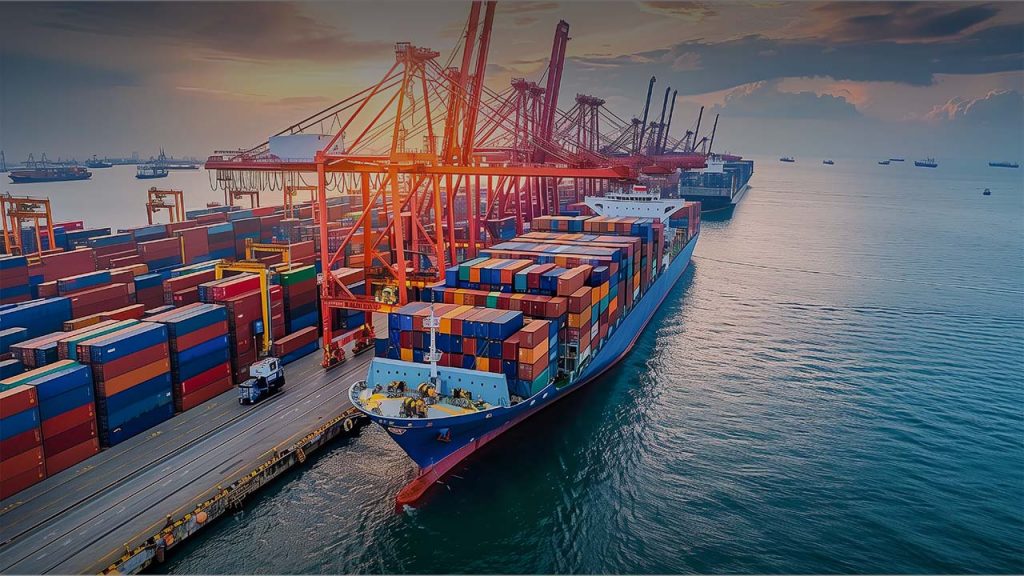
Smart Ports — Setting the Context
Global ports are being forced to evolve as maritime trade enters a period of prolonged volatility and structural transition. While global maritime trade is projected to grow at an average of around 2% annually from 2026 to 2030, this growth is expected to unfold across longer routes, higher uncertainty, and greater operational strain. Traditional port operating models, built around siloed systems and manual coordination, are increasingly misaligned with these realities. As a result, smart ports are becoming critical infrastructure for supply chain resilience, operational efficiency, and the future of global trade.
Smart Ports represent a structural shift in how ports operate and deliver value. Enabled by smart port technology such as AI in port operations, IoT, Digital Twins, advanced analytics, and cargo handling automation, smart port operations connect vessels, terminals, logistics partners, and infrastructure into a single, intelligent operating environment. This integration supports smart shipping solutions, drives digital transformation in shipping, and enables measurable cost reduction in logistics while improving safety and sustainability. To understand why this transformation is becoming unavoidable, it is first necessary to examine the operational, technological, and regulatory challenges ports face today.
Challenges on the Path to Smart Port Adoption
Before understanding how smart ports deliver value, it is essential to recognize the challenges ports face today. These challenges are the drivers behind smart port adoption.
Capacity and Congestion Pressure
Mega vessels and uneven arrival patterns place extreme strain on berths, yards, and hinterland connections. Manual planning and static scheduling models cannot adapt fast enough, leading to congestion, delays, and cascading supply chain disruptions.
Fragmented Operations and Limited Visibility
Port operations involve multiple stakeholders, systems, and data sources that often operate in silos. Limited real-time visibility across terminals, shipping lines, customs, and inland logistics creates inefficiencies and coordination gaps.
Sustainability and Regulatory Compliance
Ports must comply with increasingly stringent environmental regulations. Port decarbonization is mandatory under the IMO Net Zero Framework, and adherence to standards such as the Environmental Ship Index is becoming a prerequisite for global competitiveness.
Safety and Environmental Risk
Handling oil tankers and gas carriers introduces significant safety and environmental risks. Monitoring MARPOL compliance, detecting pollution events, and ensuring safe loading and unloading operations require more than manual supervision.
Legacy Systems and Workforce Impact
Many ports still rely on legacy systems that are difficult to integrate with modern platforms. At the same time, automation changes workforce requirements, demanding reskilling and new operating models.
Smart Port Technologies That Address These Challenges
Smart ports overcome these challenges by deploying a tightly integrated technology stack.
Agentic AI in Port Operations
Agentic AI represents a major evolution beyond traditional automation. In smart ports, AI agents and large language models act autonomously within defined boundaries, making decisions, interpreting contracts, and assisting operators.
Key Agentic AI use cases include:
- Charter party interpretation
AI agents quickly extract critical clauses from charter party agreements, identify risks, flag exceptions, and automatically generate voyage orders. This reduces manual review effort and minimizes contractual disputes.
- Contract intelligence
AI benchmarks pricing across contracts, detects ambiguous language, and alerts stakeholders to potential commercial risks before execution.
- Claims management
Agentic AI accelerates claims processing and settlements by analyzing voyage data, detecting additional or disputed charges, and reducing turnaround time for resolution.
- Virtual assistant for port control operators
AI agents act as real-time virtual assistants, helping operators troubleshoot alarms, analyze anomalies, and resolve operational issues faster during live port operations.
Beyond commercial processes, AI in port operations also optimizes container terminal efficiency through intelligent yard stacking plans, sequencing of container movements, vessel scheduling, routing, terminal assignment, and lane selection. These capabilities directly reduce congestion and improve throughput.
IoT and Real-Time Port Intelligence
IoT in shipping forms the sensory layer of smart port operations. Sensors capture data across equipment, containers, vessels, and infrastructure, enabling continuous monitoring and predictive insights.
IoT applications include:
- Monitoring quay walls, cranes, and yard equipment for predictive maintenance
- Tracking container location, condition, and dwell time
- Using environmental sensors to detect pollution events and support MARPOL compliance
- Integrating drones for aerial inspection and environmental monitoring
IoT data feeds centralized dashboards and analytics platforms, enabling ports to manage safety, compliance, and performance in real time.
Digital Twins for Simulation and Optimization
Digital Twin technology is foundational to smart port operations. A Digital Twin creates a live virtual replica of the port, including container layouts, vessel movements, yard operations, and environmental conditions.
Digital Twins enable ports to:
- Simulate container yard layouts and stacking strategies
- Analyze operational scenarios before execution
- Test process improvements without disrupting live operations
- Improve planning accuracy and operational resilience
These simulations enable ports to identify bottlenecks, refine workflows, and drive measurable process efficiency improvements across terminal and yard operations. By combining Digital Twins with AI and IoT data, ports can continuously optimize processes and adapt to changing conditions.
Automation, AMRs, and Terminal Optimization
Automation is central to smart port efficiency, particularly in container terminals.
Autonomous Mobile Robots (AMRs) are increasingly used in smart ports, more so than Automated Guided Vehicles (AGVs). The reason is simple: AMRs can move non-linearly, allowing greater flexibility in dynamic port environments where routes and conditions frequently change.
Automation capabilities include:
- Automated cranes and yard equipment
- AMRs for container movement and logistics support
- Automated gate operations and terminal workflows
These technologies significantly improve smart port operations, reduce human error, enhance safety, and contribute to cost reduction in logistics.
Sustainability, Safety, and Compliance as Core Smart Port Pillars
Sustainability is not optional for a port to qualify as a smart port.
Port Decarbonization
Ports play a critical role in meeting IMO Net Zero Framework objectives to cut greenhouse gas emissions in shipping. Smart ports reduce emissions by minimizing vessel idle time, optimizing berth allocation, enabling shore power, and improving energy efficiency across terminal operations.
Environmental Standards and Monitoring
The Environmental Ship Index is a recognized benchmark that smart ports must adhere to. IoT sensors and drones help detect pollution events, monitor air and water quality, and manage environmental impact using real-time analytics and dashboards.
Safety Engineering
Smart ports incorporate advanced safety engineering to manage the risks associated with oil tankers and gas carriers. Real-time monitoring, automated alerts, and predictive analytics improve incident prevention and emergency response.
Benefits of Smart Ports
The impact of smart port technology extends across the logistics ecosystem.
- Faster vessel turnaround and improved terminal throughput
- Reduced congestion and optimized hinterland coordination
- Lower operating costs and improved asset utilization
- Enhanced safety, transparency, and regulatory compliance
- Measurable cost reduction in logistics through automation and AI-driven optimization
- Stronger alignment with sustainability and decarbonization goals
Collectively, these benefits position smart ports as enablers of resilient, efficient, and sustainable global trade.
Future Trends in Smart Port Operations
Looking ahead, smart ports will continue to evolve through:
- Greater use of Agentic AI for autonomous decision-making
- Expanded Digital Twin adoption for predictive and prescriptive optimization
- Deeper integration of smart shipping solutions across supply chains
- Increased focus on green corridors, alternative fuels, and zero-emission port operations
- Regional collaboration between ports to enhance resilience and trade continuity
These trends will define the next phase of digital transformation in shipping.
How Hexaware Can Help
Hexaware empowers port authorities, terminal operators, and logistics providers to navigate the digital frontier through a combination of cutting-edge IT expertise and a collaborative ecosystem approach.
AI-Driven Innovation & Strategic Partnerships
Hexaware leverages its expertise in Agentic AI, data analytics, and cybersecurity to build the “brain” of the modern port. While we provide the core intelligent frameworks—including scalable AI agents and secure cloud environments—we are open to collaborate with specialized industry partners to integrate niche operational technologies. This partnership-first model allows us to deliver comprehensive, end-to-end solutions that are secure, scalable, and tailored to the unique demands of the maritime ecosystem.
By combining our IT leadership with the strengths of domain-specific experts, Hexaware enables smarter, safer, and more resilient port operations at scale.
Ready to Transform Logistics with Smart Port Technology?
Partner with Hexaware to accelerate your smart port journey and build intelligent, resilient operations that power the future of global trade.