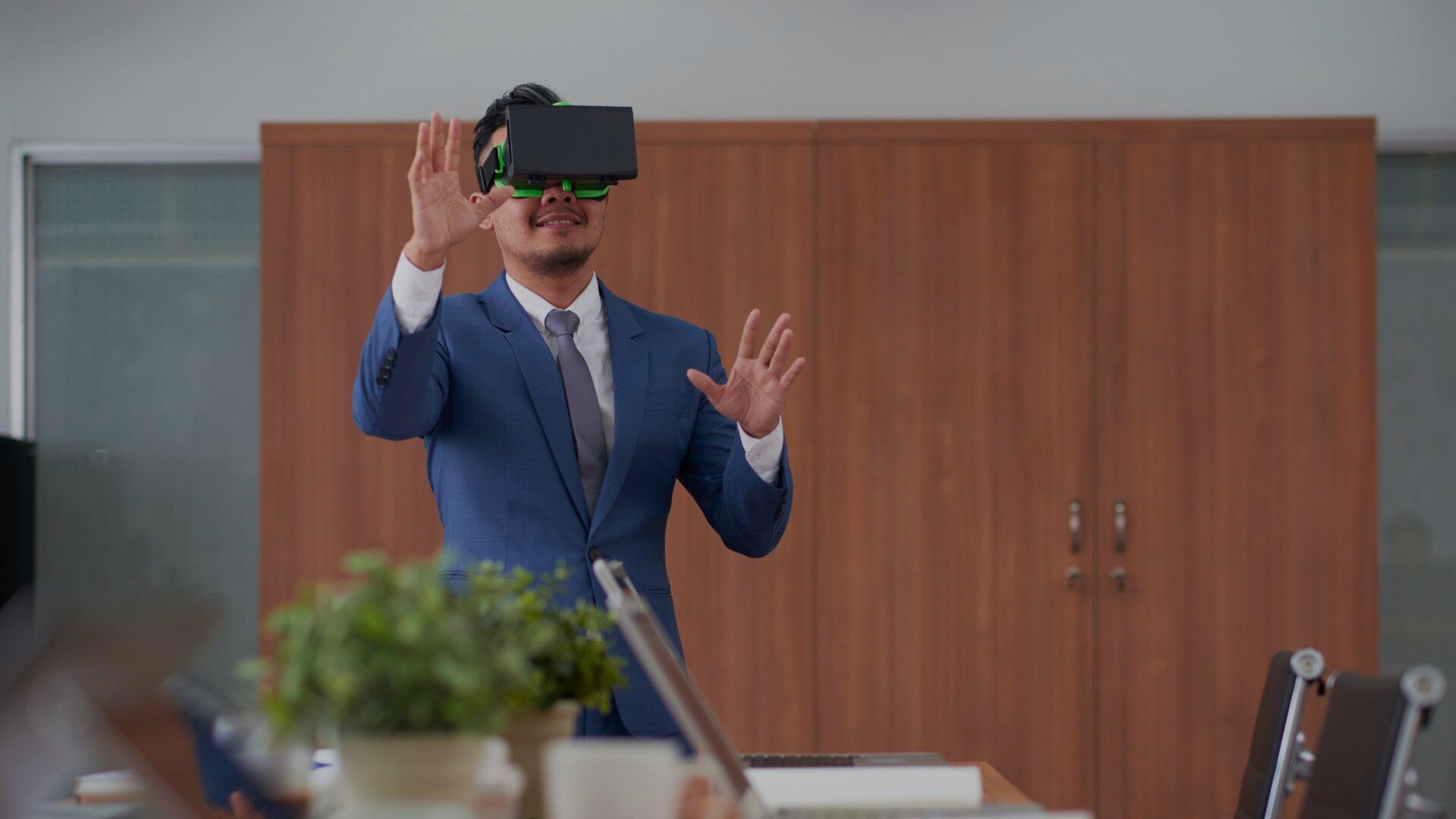
What is Extended Reality?
Extended Reality (XR) is an umbrella term that encompasses immersive technologies like Virtual Reality (VR), Augmented Reality (AR), and Mixed Reality (MR). It blends the physical and digital worlds, allowing users to interact with virtual elements in real or simulated environments. XR transforms how people experience digital content, making it more engaging, realistic, and interactive.
Differences Between VR, AR, and MR
Virtual Reality (VR) immerses users in a fully digital environment, typically using a headset that blocks out the physical world. Augmented Reality (AR) overlays digital elements onto the real world via devices like smartphones or AR glasses. Mixed Reality (MR) combines both, allowing digital and physical objects to coexist and interact in real-time. Each serves different purposes: VR for complete immersion, AR for enhancing reality, and MR for advanced interactivity.
Impact of Extended Reality in Business and Industry
XR is revolutionizing how businesses operate—improving efficiency, enhancing user experience, and enabling cost-effective training and design. In manufacturing, it reduces prototyping costs through digital twins. In healthcare, it facilitates realistic surgical simulations. XR also supports remote collaboration, giving distributed teams the ability to interact as though they were physically together, boosting productivity and innovation.
Applications of Extended Reality
From employee onboarding to virtual showrooms, XR is being applied across sectors. In retail, AR helps customers visualize products in their space before buying. In real estate, VR offers virtual property tours. In education, MR enables interactive learning environments. These technologies are making experiences more personalized, engaging, and effective across customer-facing and internal operations.
Case Studies of Successful Extended Reality Implementations
Hexaware partnered with a global personal care brand to develop an augmented reality-enabled mobile app for their annual event. The app integrated AR, object recognition, and e-commerce, allowing attendees to scan event materials and interact with digital product demos, boosting engagement and resulting in hundreds of thousands of dollars in sales. Read the case study.
In another initiative, Hexaware worked with a fashion technology company to build a virtual showroom platform powered by Adobe Experience Cloud. The immersive, metaverse-inspired experience featured 360° tours, AR integrations, and digital twins of luxury products. Within a year, over 40 luxury fashion brands had adopted the platform, generating over $14 million in revenue. Read the case study.
Emerging Trends and Future of XR
The future of XR lies in its convergence with GenAI, enabling smarter, faster, and more adaptive experiences. Trends such as spatial computing, holographic communication, and virtual workplaces are gaining traction. As hardware becomes more accessible and software platforms mature, XR is set to become an integral part of digital transformation strategies across industries.