In Pune’s brick-kiln settlements, staying in school can depend as much on a family’s circumstances as on a child’s willingness to learn.
Rajnandini’s father has said that without AAKAR, his daughter might have become a child laborer. Today, she is pursuing higher education.
Supporting Education Beyond the Classroom
The distance between those two outcomes cannot be explained by school support alone. In Pune’s brick-kiln settlements, sustainable community development is built through practical gains that reinforce one another: a child remains in school, a parent learns to read, a worker secures the documents needed to access public systems, or a woman gains a skill she can use to safely .
AAKAR works across nine centers in these communities and currently reaches more than 336 children and 114 adults. Supported by Hexaware, the Family Strengthening Program stays closely involved with children and the adults responsible for their care. Education is central to the work, alongside adult literacy, family counseling, vocational training, and assistance with government registrations.
Rajnandini Stayed in School. Her Family Changed With Her.
Rajnandini grew up in a family employed at a brick kiln. Poverty placed her education at risk from an early age. Her father was illiterate and struggled with addiction, and leaving school for work was a genuine possibility.
After joining AAKAR, she received academic support, mentorship, and a learning environment where she could continue her studies. She began doing well in school and grew more confident. In time, other children in the community began looking to her as an example.
The work also reached her father.
Through counseling and continued family engagement, he began to reconsider what education could offer his daughter. His own experience of schooling had been limited, and the immediate pressures on the household were difficult to ignore. AAKAR stayed in conversation with the family while Rajnandini continued to study.
She is now in higher education.
Her story says something important about migrant community development. A child may receive excellent academic support and still leave school if the pressures at home remain unchanged. In Rajnandini’s case, progress continued because the program worked with her family as well as with her.
Keeping Children in School Through Community-based Education Support
Migration can interrupt a child’s education several times. Families move between worksites, enrollment records may not follow smoothly, and gaps in attendance soon become gaps in learning. For parents working long hours at a kiln, keeping up with school requirements can be difficult even when they want their children to continue.
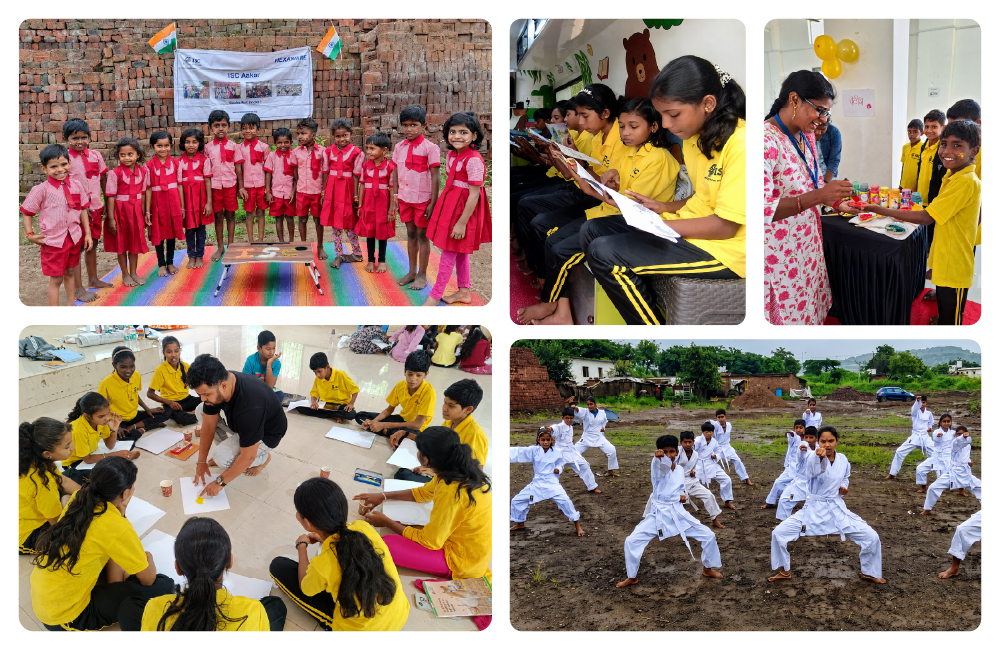
AAKAR’s work in education for underprivileged children begins with Balwadi and support classes for children between the ages of 4 and 14. Eighty-eight children currently attend Balwadi sessions, and 90% of enrolled students attend regularly. The program has also helped 186 children enter government schools.
Those figures are encouraging. The daily work behind them is less visible.
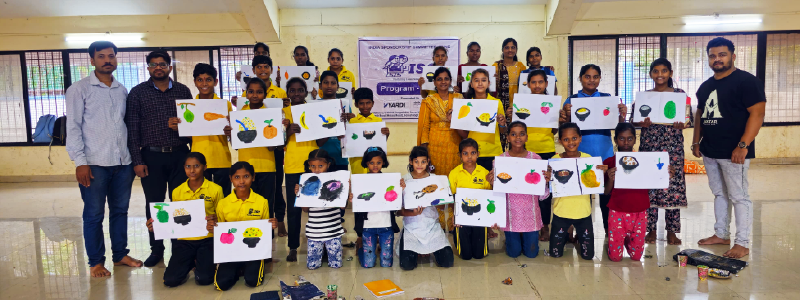
Children return to the centers for help with lessons. They receive nutrition support and take part in English classes, sports, dance, art, craft, career guidance, personality development sessions, and educational visits. A mobile library van has completed 126 sessions, bringing books to more than 250 students who may have little reading material available at home.
Digital and STEM sessions introduce children to another kind of learning. The focus on digital literacy for children gives them experience with tools and formats that are increasingly part of school and work. For many, the sessions are also an opportunity to explore technology in an environment where someone is available to guide them.
As a CSR education program, AAKAR has to account for the life surrounding the learner. Regular attendance, nutrition, access to books, confidence in the classroom, and exposure beyond the kiln settlement all have a place in its approach to child welfare.
Why Adult Literacy Matters for Children’s Education
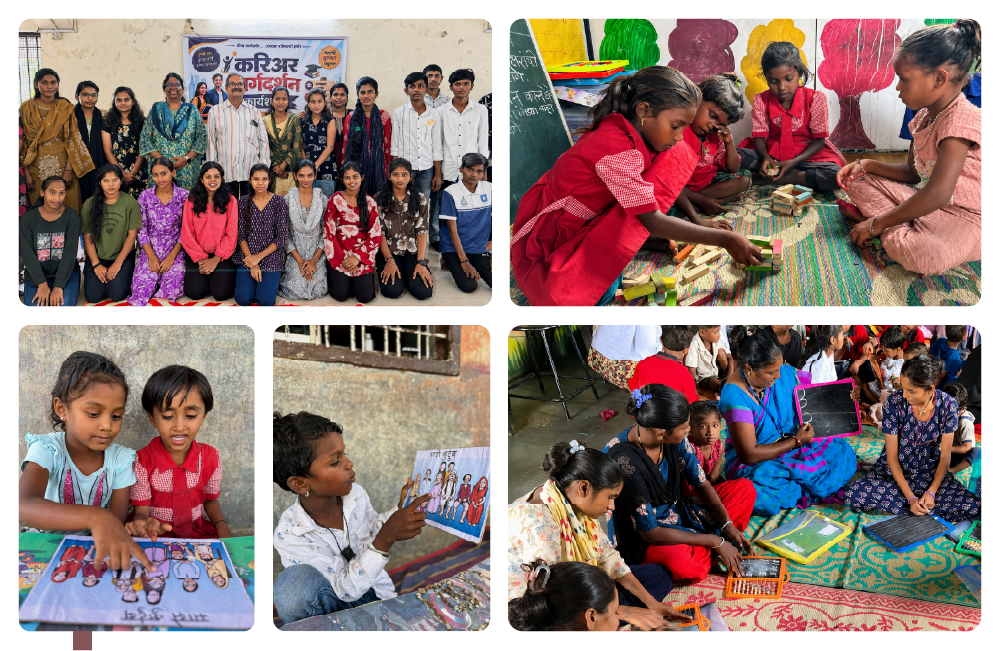
More than 68 adults have enrolled in literacy classes through AAKAR. Nearly one-third have already shown improvement in reading and writing.
For an adult who did not attend school, literacy can change ordinary moments. A school notice becomes easier to follow. A name or address can be entered on a form without assistance. A worker can read part of an official document rather than relying completely on another person to explain it.
Parents also meet through the program. Eight meetings have brought together more than 200 participants, and four community rallies have been held. These community engagement activities create room for discussions that may otherwise happen only after a problem has become urgent: school attendance, documentation, welfare access, work registration, and concerns within the settlement.
AAKAR has helped residents obtain 46 E-Shram cards and complete 37 domestic worker registrations. The paperwork may appear routine from outside the community. For migrant workers, it can determine whether they are recognized within a formal system and whether a benefit or protection is available when needed.
Adult literacy, parent meetings, and documentation support are closely tied to children’s education. A family that can communicate with a school, understand a process, and access available support is better placed to keep a child enrolled when work or income becomes uncertain.
Women’s Skill Development Creates Long-term Family Stability
Women in brick-kiln communities often work while also caring for children and managing the household. A training course that requires regular travel or fixed working hours may be difficult to use.
AAKAR’s women empowerment initiatives include stitching and tailoring courses for 29 women. The skill can be practiced from home, within the settlement, or in another community if the family moves for work.
For some participants, the training creates the possibility of earning independently. Others may use it to supplement household income or reduce their reliance on kiln work. The value lies partly in its portability. A woman does not have to leave the skill behind when the family changes location.
Her participation can also affect decisions within the household. Income, literacy, and greater confidence in dealing with local systems can influence how money is used, whether children remain in school, and how a family responds when work becomes uncertain.
How AAKAR’s Nine Community Centers Strengthen Families and Education
AAKAR brings together work that is often delivered through separate programs. Children attend classes. Adults learn to read. Parents meet and receive counseling. Workers complete registrations. Women train in stitching and tailoring.
Within a brick-kiln community, these are not separate stories.
A parent’s literacy can help a child remain connected to school. Registration can bring a household closer to a welfare system. An additional source of income can reduce the pressure to send an older child to work. Family counseling can change how parents view a daughter’s education, as it did in Rajnandini’s home.
This is holistic development in its most useful form: paying attention to the points where family life, education, income, and access to public systems meet.
A Holistic Approach to Community Development
Hexaware’s support helps keep the nine AAKAR centers running across the brick-kiln communities they serve. The centers provide families with a place they know and can return to, even when much of life around them remains unsettled.
The numbers show the program’s reach. Rajnandini’s experience shows what that reach can mean inside one family. She stayed in school. Her father began to see her education differently. A path that might have led to child labor now extends into higher studies.
Family strengthening rarely arrives as one decisive moment. It is built through repeated contact, practical help, and people who continue to pay attention when a family is under pressure.
For migrant communities around Pune, AAKAR is helping provide that continuity.