In today’s rapidly evolving digital landscape, a robust cloud transformation strategy is no longer a competitive advantage; it’s a necessity. As organizations prioritize agility, scalability, and innovation, migrating applications to the cloud has become a central focus for both IT and business leaders. Yet, the journey is complex, fraught with technical, operational, and cultural hurdles. Navigating the cloud migration decision tree requires a clear understanding of application cloud migration strategies, from initial assessment to seamless execution. Whether you’re dealing with legacy application modernization, application refactoring, or leveraging specialized cloud migration services, the right approach can unlock unprecedented value. This guide demystifies the application cloud migration process with actionable insights, a comprehensive cloud migration checklist, and proven methodologies to overcome key challenges. We’ll explore best practices for application modernization, examine when to prioritize application migration to the cloud for secondary workloads, and reveal how tailored cloud services support every phase of your transformation. By embracing a holistic cloud strategy, organizations can future-proof their operations, optimize costs, and deliver superior user experiences. Let’s uncover together in this blog the art and science of successful application cloud migration.
Legacy application modernization and application migration to the cloud have become essential business imperatives to enhance resilience, stay agile, and ensure sustainable growth in a cloud-first world. While extensive resources are available on best practices for application cloud migration, this blog focuses on the most critical strategies that drive successful application cloud migration.
Application cloud migration is the process of moving enterprise applications from on-premises environments to cloud platforms to enhance agility, scalability, and performance. Despite notable successes in migrating legacy applications, many initiatives fail due to mostly due to misalignment with the primary objectives of application cloud migration. Addressing these gaps is key to ensuring smooth transitions and maximizing the benefits of the cloud.
Objectives of The Application Cloud Migration
The objectives of cloud migration shape your application cloud roadmap. These objectives should remain uncompromised to ensure the investment delivers maximum value for IT-enabled business organizations who embrace this journey.
Organizations adopt application cloud migration to simplify operations, boost availability and performance, reduce TCO, leverage pay-as-you-go cloud models, meet regulatory requirements, and accelerate broader digital transformation across their enterprise-wide initiatives.
Arriving at the most suitable application cloud roadmap requires careful consideration of the organization’s specific needs and IT landscape. A well-defined cloud migration checklist can help measure the success of this journey and ensure the roadmap aligns with business objectives.
IT Landscape of a Typical IT-enabled Business Group
The landscape of a typical mid-size IT-enabled business organization may be as follows:
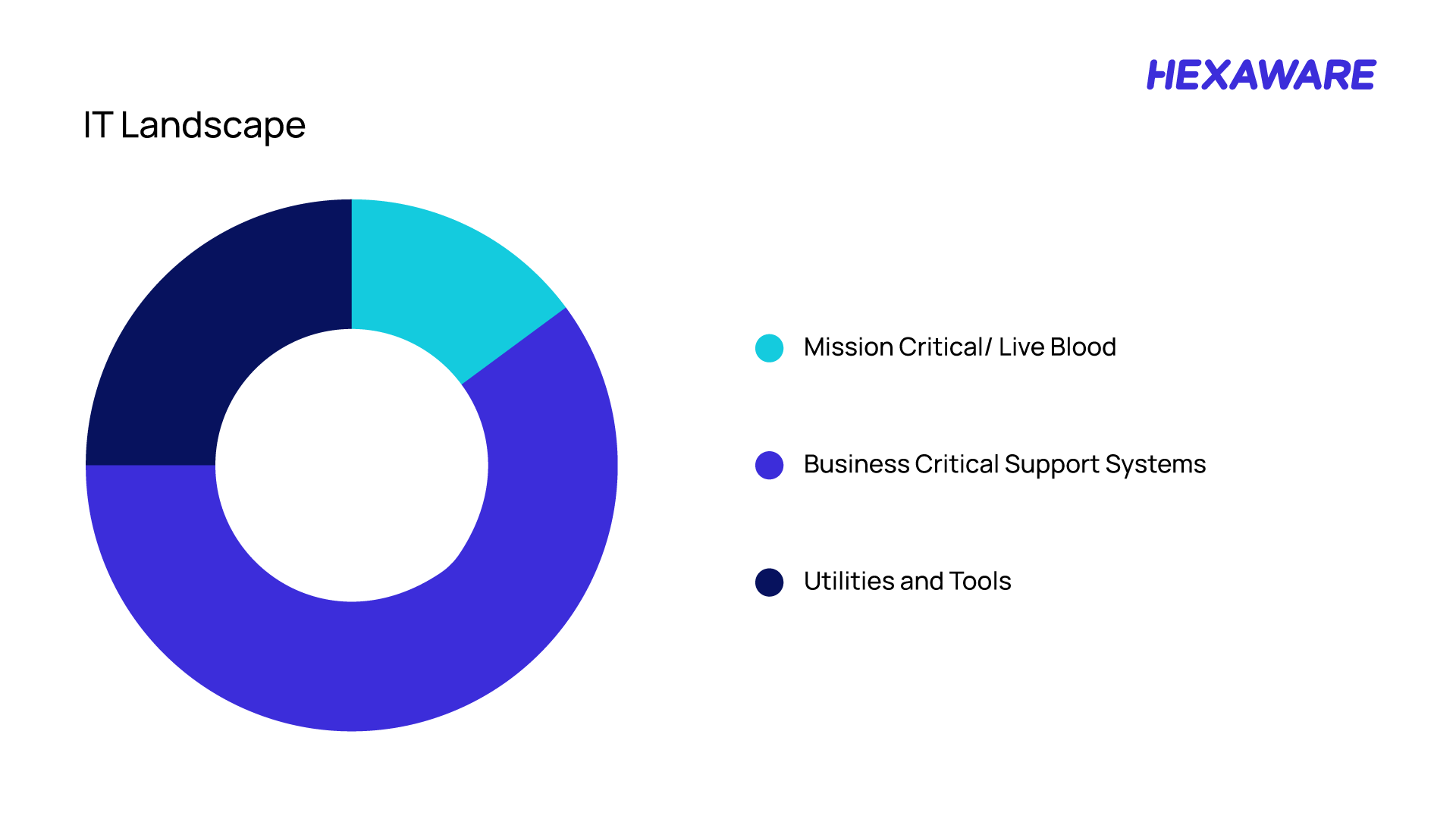
Picture 1: IT Landscape of a mid-sized organization
In most scenarios, there may be a concentration of COTS (Commercial off-the-shelf or third-party products) applications in the first and second categories, where nearly 50% of the second category and almost 90% of the third category would ideally be non-COTS/custom applications.
|
Mission-critical/ Life Blood |
Business-critical Support Systems |
Utilities and Tools |
|
10-30% These are the core applications that drive the organization’s primary operations and revenue streams. Downtime or failure in these systems can severely impact business continuity. Examples include ERP systems, financial platforms, and supply chain management tools. Migrating these requires a well-structured strategy to ensure seamless operation and minimal risk. |
30-60%
These systems support essential business processes but are not as critical as mission-critical applications. They include CRM platforms, HR systems, and data analytics tools. While not directly tied to revenue generation, their functionality is crucial for operational efficiency and decision-making. These are typically migrated after mission-critical systems to ensure dependencies are addressed. |
10-20%
These include non-core applications such as communication tools, development environments, and monitoring utilities. They are often easier to migrate due to lower risk and complexity. These applications typically comprise the final phase of migration, enabling organizations to optimize their IT landscape and enhance overall agility. |
Planning Application Migration to The Cloud
A strategy for migrating applications to the cloud would differ in most cases for each of the three categories explained in the previous section. Proper planning and consideration of various factors may be necessary for a successful cloud migration of all the heterogeneous applications typically present in an IT portfolio. Let’s explore some of the key factors:
Enterprise Cloud Strategy
A detailed understanding of the organization’s cloud strategy, cloud presence, and alignment with cloud service providers may be required to fully comprehend the organization’s cloud vision.
Application Portfolio Assessment
A detailed understanding of the portfolio applications based on the factors below helps arrive at the right application cloud migration options:
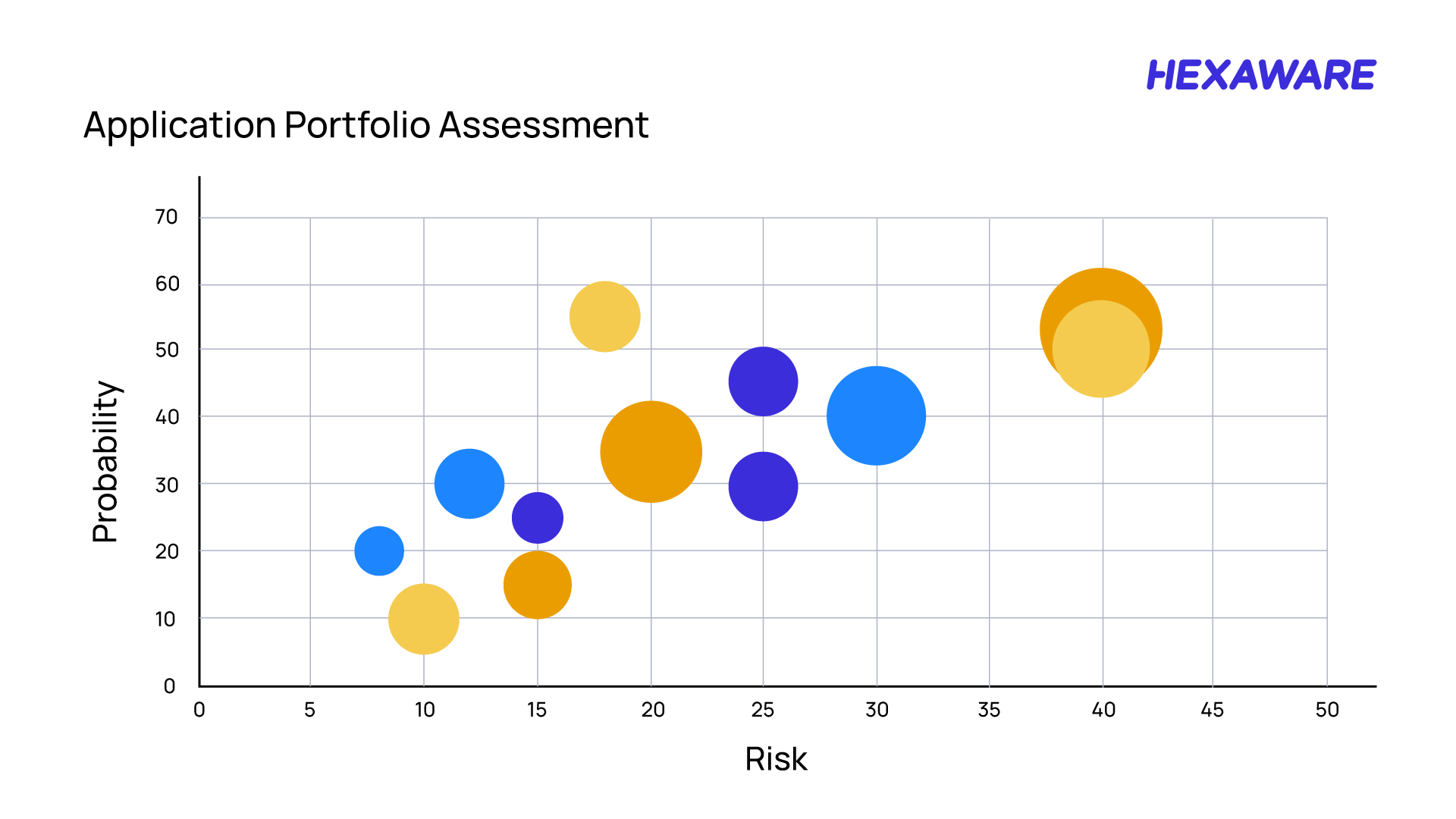
Picture 2: Application portfolio assessment
- Target users (B2C/B2B/B2E)
- Business criticality (Tier 0,1,2,3,4, etc.)
- Availability/permissible downtime
- Application type (COTS/ custom)
- Application owners (in-house/ vendors, etc.)
- Technology composition
Cloud Maturity of the IT-enabled Business Organization
A comprehensive assessment of the organization’s cloud maturity is essential, evaluated against the key parameters outlined below:
- Cloud adoption level
- Business vision
- Cloud strategy
- Application build and deployment process
- Test-driven Development (TDD)
- DevOps readiness
- Release management
- Application management
- Maintenance processes
Application Cloud Migration Roadmap & Plan
The following steps may be helpful to arrive at the right cloud migration roadmap:
- A clear understanding of all the factors (some key ones are listed above) can lead to various decision trees. Each branch of these decision trees may result in application cloud migration strategies, tailored to a group of applications with similar characteristics within the application portfolio.
- Mapping of risk/consequence vs likelihood/probability may help in arriving at the priority of the groups for migration execution.
- Mapping of application interdependencies may help in arriving at application migration waves/subgroups.
- Mapping of the critical path within waves may help in arriving at wave sprints.
Common Application Cloud Migration Challenges and How to Overcome Them
Migrating applications to the cloud presents several common challenges, including the complexity of legacy systems, data migration risks, skills shortages, security concerns, cost management issues, and misalignment among stakeholders. Legacy applications often require significant redesign or modernization, while data migration can risk loss or corruption if not managed carefully. Many organizations lack in-house cloud expertise, leading to delays and misconfigurations. Security and compliance are crucial, as missteps can lead to data breaches or regulatory violations. Unpredictable costs and integration problems with existing systems also arise. To overcome these challenges, organizations should utilize structured migration frameworks, such as the 6/7 Rs, conduct thorough assessments, and adopt a phased migration approach. Leveraging automation tools, providing ongoing training, and involving cross-functional teams help manage complexity and resistance to change. Continuous monitoring, cost optimization, and clear communication ensure a smoother transition, resulting in secure, efficient, and scalable cloud adoption for the organization.
Rehosting Applications
Applications may be rehosted in the cloud “as is” (which is also known as the “Lift-and-shift” approach), where the risks of cloud migration are minimized to near zero with minimal changes (typically suitable for lifeblood/ mission-critical applications, some of which may even be retained on-premises).
Replatforming Applications
A significant portion of business support custom applications often falls into the category of cost-heavy assets.
These applications can be replatformed to more cost-effective, robust, and proven platforms, then migrated to the cloud with relatively low risk. Leveraging automation and predictive quality assurance, this process can be completed in less time with minimal changes (typically suitable for tier 2/3/4 applications within the portfolio).
Application Refactoring/Rewriting
The percentage of business support and custom applications may not be ready for cloud migration. If these applications have dependencies on those being migrated to the cloud, they may need to be partially refactored (e.g., through API-enablement), rewritten, or replaced with SaaS solutions to enable a smooth application cloud migration for the complete application portfolio.
Creating Cloud-Native Applications
Once most applications are migrated to the cloud and integrated with on-premises, cloud-based, SaaS, and related solutions, you may encounter scenarios where new digital platforms are required. These platforms could support initiatives such as rebranding or new market penetration by integrating applications from either cloud or on-premises environments. While digital services often leverage SaaS platforms/solutions, some new business support systems may need to adopt cloud-native platforms to fully realize the benefits of the cloud.
Risk vs Returns of Application Cloud Migration
From Rehost > Replatform > Refactor, the complexity of application cloud migration can increase, which may also carry higher risks of failure. However, the benefits are also proportional to the complexity and risk. Furthermore, when business-supporting applications are in bulk, the replatforming/refactoring options can become a time-consuming and risky proposition if not planned properly.
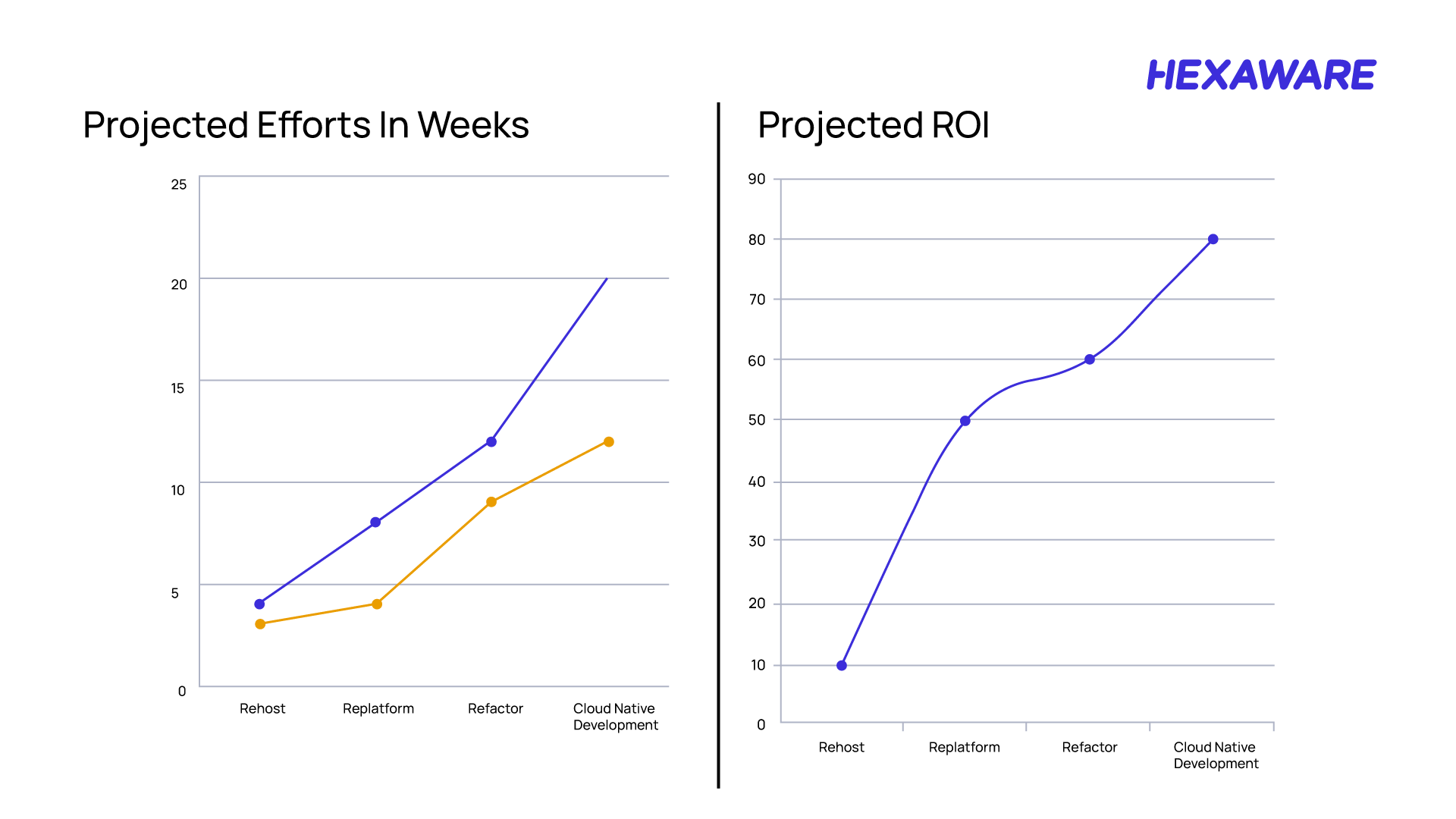
Picture 3: Effort vs. ROI
Measuring the ROI of Application Cloud Migration
While the ROI of application cloud migration will largely depend on the cloud migration objectives, the following are a few tangible and intangible benefits.
Tangible Benefits
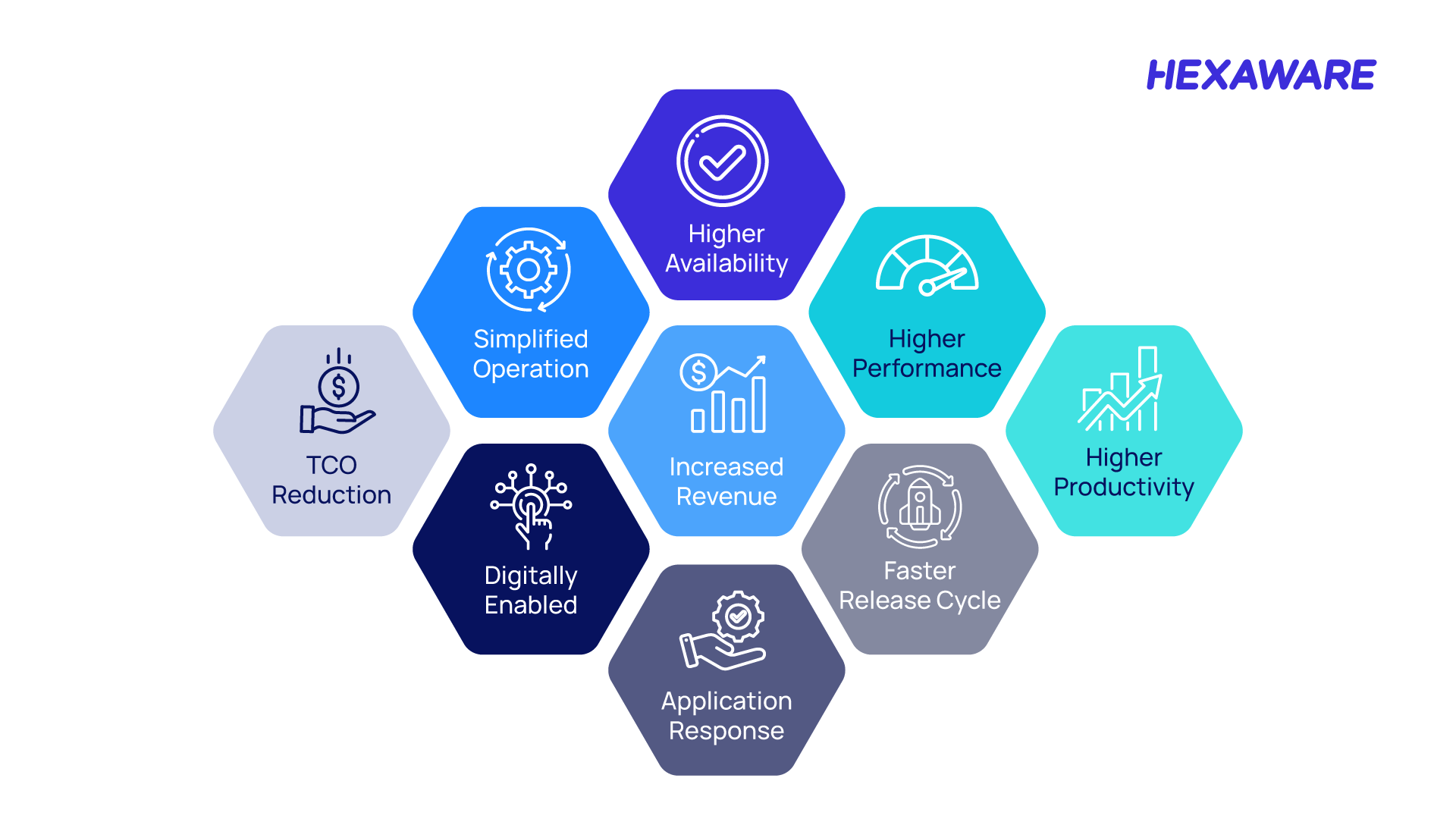
Picture 4: Benefits realized
Some even witness an increase in revenue for some scenarios (like the API economy for B2B). Cloud migration TCO reduction may largely be due to the reduction of complexity and cost of operations, including infrastructure and application platform license costs. However, this may not necessarily result in a reduction of technical debt every time.
Intangible Benefits
These can include improving the organization’s branding (B2C), employee satisfaction (B2E), improved productivity for the internal IT team (DevOps automation), improving employee productivity (B2E) by mobile interfaces, improved security, faster compliance with statutory requirements, etc.
Conclusion
Legacy application migration to the cloud requires careful planning and strategy for a successful rollout. The manual process may be too risky for the mass migration of large portfolios of big enterprises. Application replatforming and refactoring can be effectively done by leveraging automation using a time-tested platform, thereby minimizing the risk of failure and ensuring the full realization of the benefits of cloud migration.
Hexaware’s Amaze® platform redefines the way enterprises approach cloud adoption. With a deep understanding of market trends and insights from our extensive R&D and client collaborations, Amaze® leverages AI, pattern recognition, and intelligent automation to simplify and accelerate the migration of legacy, on-premises monolithic applications to cloud-native architectures.
Designed to work seamlessly across any cloud platform, Amaze® supports a wide range of industry verticals, including banking, capital markets, airlines, insurance, and more. By enabling rapid and automated cloud transformation, it empowers organizations to reimagine their business models, drive innovation, and reshape industry landscapes for a resilient and agile future.
Elevate your digital transformation with Hexaware’s cloud migration and modernization services.