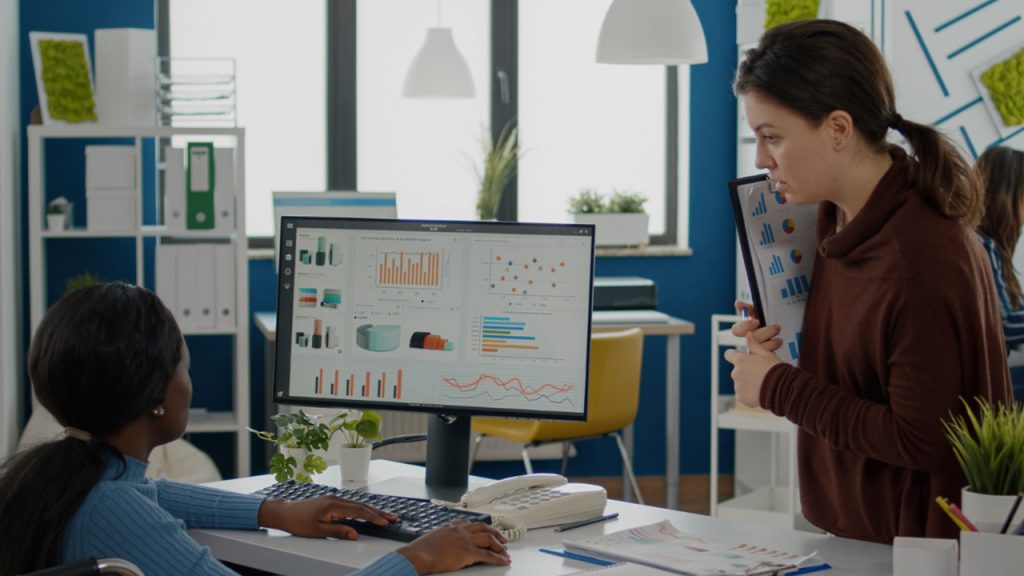
Data is one of the most coveted assets for any business today. With retail becoming a hypercompetitive landscape, businesses that can extract insights from the swathes of data they collect will stand head and shoulders above the competition. Retail analytics gives retailers visibility into customer behavior, preferences, and buying patterns to optimize every aspect of the business. From predictive retail analytics tools to omni-channel analytics, analytics tools will help retailers stay ahead of customer demand, keep their inventory lean, increase customer satisfaction, and leave the competition in the dust.
In this blog, we’ll define retail analytics, highlight some key tools and methodologies used in retail analytics, explain the benefits you can expect to see with retail analytics, and offer some best practices to help you build out your retail analytics strategy. Finally, we’ll tie everything back to how Hexaware’s retail IT services empower retailers to leverage analytics for digital transformation.
What Is Retail Analytics?
Retail analytics is defined as the practice of using quantitative and qualitative data from various channels to improve decision-making and business performance. Retail analytics helps retailers learn more about how customers behave, which products sell best, where to allocate inventory, how to maximize margins through pricing, and more.
Retailers can use retail analytics tools to draw information from their point-of-sale systems, customer loyalty programs, supply chain management systems, eCommerce platforms, and other areas. These data points can then be processed using business intelligence platforms, artificial intelligence modeling, etc. to create useful visualizations and identify trends.
Retail analytics helps retailers answer questions such as:
- What is selling best, and where?
- Which customers are most profitable?
- Where should we stock inventory?
- What factors are contributing to customer churn?
- What emerging trends can we expect to impact sales?
By collecting raw data and turning it into tangible business insights, retailers can drastically improve their operations and the overall customer experience.
The Four Major Types of Analytics
There are many types of analytics that fall under the retail analytics umbrella. Understanding each will help you determine which types of analytics to build as part of your strategy. Types of retail analytics include:
1. Descriptive Analytics
Descriptive analytics are one of the most basic forms of analytics. This type of analysis uses past data to identify trends and patterns. Descriptive analytics can show you what happened yesterday, last week, or last year.
2. Diagnostic Analytics
Diagnostic analytics take descriptive analytics a step further by not just showing you what happened, but also why. By correlating different variables, retailers can use diagnostic analytics to understand why sales may have dropped or why churn is high.
3. Predictive Retail Analytics
Predictive analytics, often supported by machine learning-based models, uses historical as well as real-time data to predict future outcomes. Predictive retail analytics can identify what products will be best sellers next month, where there will be unexpected spikes in demand, which customers are most likely to churn, and more. Predictive analytics gives retailers the power to anticipate market changes before they happen.
4. Prescriptive Analytics
Prescriptive analytics uses prediction models to recommend certain actions. Where predictive analytics can show you what will happen should you change pricing, for example, prescriptive analytics will recommend you change pricing.
Taken together, these analytics types allow retailers to measure, understand, predict, and improve every facet of their business.
Why Leveraging Analytics in Retail Is Important Today
The retail industry is more complex than ever, with growing channels, evolving customer expectations, shifting markets, and more. Retail analytics provides retailers with insight into these complexities that they can use to compete. Here are some reasons why retail analytics is necessary to operate a successful retail business:
Gain a Deeper Understanding of Customers
By leveraging retail analytics, retailers can better understand how their customers behave across all channels and use that knowledge to provide more personalized service.
Optimize Inventory and Operations
Retail analytics can show you where to place inventory and how to reduce your overall carrying costs by reducing both overstock and stockout scenarios.
Improve Pricing + Promotion Efficacy
Analytics allows retailers to understand what pricing and promotional tactics are most effective and which aren’t.
Better Prepare for the Future
Predictive retail analytics can allow you to plan for future trends, demand increases/decreases, and unexpected events.
Create a Data-Driven Culture
Analytics encourages everyone to use data as the basis for their decision-making rather than going with their gut.
Gain a Competitive Advantage
Businesses with analytics will be able to outperform the competition by reacting more quickly to changes in the market and exceeding customer expectations through personalization.
Core Retail Analytics Tools and Technologies
Retailers have access to many tools and technology that can help them collect data from multiple sources and interpret it. Here are some of the major categories of retail analytics tools:
Data Collection + Integration
Tools and technologies that can pull data from your point-of-sale system, CRM platform, eCommerce platform, supply chain management software, and other customer-facing channels. Data integration is critical to ensuring your analytics are based on accurate data.
Business Intelligence (BI) Platforms
Business intelligence and visualization platforms take complex data and display it in an easily digestible format. BI tools are essential for any retailer who wants to be able to understand their analytics without needing a team of experts on staff.
Predictive Analytics Tools
Tools that use machine learning and other modeling techniques to predict future outcomes.
Customer Behavior Analytics
Software that can analyze customer journeys and help you segment your customers and identify common behaviors.
Inventory and Supply Chain Analytics Software
These tools focus exclusively on your supply chain and inventory.
Real-Time Analytics
Real-time analytics can provide retailers with instant insights that can be used to make pricing adjustments on the fly, tweak promotions, and more.
These tools allow retailers to process their data and learn from it. However, to truly enjoy the benefits of retail analytics, you’ll need to put this data to use.
Benefits of Retail Analytics
Retail analytics improves every part of your business including your customers’ experience when interacting with your brand. Here are some of the advantages of retail analytics:
Make More Informed Decisions
Retail analytics put hard data at your fingertips so you can make better decisions with confidence.
Improve Customer Experience
When you understand how your customers behave and what they want, you can offer more personalized experiences that they’ll love.
Reduce Expenses + Inventory Waste
Minimize excess stock and out-of-stock scenarios with powerful retail analytics.
Increase Sales + Revenue
Retail analytics tools can help you identify upselling and cross-selling opportunities to increase your average order value.
Stand Out From the Competition
If your competition fails to leverage retail analytics, you’ll know more about your market and be able to provide a better customer experience than they can.
Operate More Efficiently
Streamlined reporting, automation, and analytics can improve your internal operations as well.
Retail analytics allows you to identify weaknesses in your retail strategy and address them. Gaining insight into your business with analytics can put you miles ahead of your competition.
How Predictive Retail Analytics Accelerates Retail Success
Earlier we mentioned predictive retail analytics but what exactly is it, and how can it help your business? Predictive analytics allows retailers to do more than just look at what has happened in the past. You can use predictive analytics to predict future sales, demand, customer churn, and more.
Here are some other benefits of predictive retail analytics:
- Demand Forecasting
- Predict which products will sell best and when.
- Customer Churn Prediction
- Predict who will churn and optimize your retention strategies.
- Know ahead of time which pricing strategies will be most effective by predicting demand curves.
- Predict how successful a promotion will be based on past campaigns.
Predictive analytics relies heavily on using machine learning to not only look at your internal data but outside factors like weather, seasonality, current events, and more.
Best Practices for Implementing Retail Analytics
Implementing a new analytics solution isn’t always as simple as buying a software license and calling it a day. Use these best practices to ensure you get the most out of your analytics strategy:
- Align Analytics Initiatives with Business Goals
Every analytic you implement should support your business goals. If your goal is to reduce inventory waste, look for analytics that will provide insight into your inventory management.
- Invest in Data Quality + Data Integration
Poor data can ruin your analytics efforts. Make sure your data is accurate, accessible, and integrated across your systems.
- Focus on User Adoption
Buy the right tools and make sure your teams are trained on them so everyone from executives to warehouse managers can put your data to work.
- Implement Predictive + Prescriptive Analytics
Move beyond descriptive analytics and start predicting the future.
- Continually Monitor Your KPIs
Analytics isn’t a set-it-and-forget-it deal. Constantly monitor your KPIs and make adjustments to your strategy as needed.
- Implement AI Capabilities
Using AI and machine learning allows you to not only automate tasks but put advanced predictive models to work for you.
- Focus on Security and Compliance
Don’t forget about security and compliance when working with customer data and proprietary business information.
- Plan for Scalability
Just as your business grows, your analytics should too. Make sure your analytics infrastructure is scalable enough to handle more sources and workloads.
How Hexaware Supports Retail Analytics and Digital Transformation
Gone are the days where retailers could operate without a strong analytics solution in place. Not only will retail analytics help you understand your business better, but it can also power your digital transformation efforts. Hexaware’s retail IT services support everything from integrating your data for analytics purposes to building the predictive models you need to anticipate changes in customer demand.
Here’s how Hexaware can help your retail organization leverage analytics:
- Retain everything from your POS system to your customer data with data integration.
- Employ predictive modeling to identify sales trends and customer behavior.
- Use retail dashboards to visualize your data and put it to work.
Partner with Hexaware and start leveraging analytics to deliver better experiences for your customers and run more efficient operations.
Common Challenges in Retail Analytics
As with any business initiative, you may come across a few road bumps along the way. Some common retail analytics challenges include:
Data Silos
Because retailers typically operate across many systems, it can be hard to create a single source of truth for your analytics.
Skill Gap
Retail analytics requires special skillsets that your team may not have. From data collection to knowledge
Analysis, you’ll need experts that understand what they’re doing.
Change Management
Changing your business to become data-driven isn’t always easy. You’ll need your leadership on board as well as buy-in from your team.
Security + Privacy
When working with customer data, security and privacy should be top of mind.
Prepare for these common analytics challenges so you can overcome them.
Conclusion
Retail analytics is critical for retailers who want to stay competitive in today’s marketplace. Not only will retail analytics tools help you learn more about your business, but with predictive retail analytics, you can plan for what’s to come. If you’re ready to dive into the world of retail analytics, keep these best practices in mind to ensure success. Partner with Hexaware and start leveraging analytics for digital transformation today.