Think about what happens when you walk into your favorite store. You do not stop to appreciate the perfect temperature or the steady airflow moving through the space. You do not notice the refrigerators quietly doing their job to keep perishables fresh. You simply shop, and that is the magic of it. Comfort in retail is meant to be invisible.
Behind that effortless experience lies one of retail’s biggest and least glamorous challenges: keeping stores cool, air clean, food safe, and shoppers happy without blowing through budgets or sustainability goals.
For retailers operating across dozens or hundreds of stores, managing HVAC and refrigeration systems efficiently has become increasingly complex. Rising energy costs, aging infrastructure, and growing sustainability commitments are forcing retailers to rethink how they manage energy across their store networks. This is where retail energy management plays a critical role. By improving energy efficiency in retail operations, retailers can reduce operating costs, improve reliability, and meet growing sustainability expectations.
Why HVAC and Refrigeration Drive Energy Consumption in Retail Stores
HVAC and refrigeration systems are the silent workhorses of the retail world. They operate continuously, twenty-four hours a day, every day of the year. These systems ensure products remain safe, customers remain comfortable, and store environments remain stable.
Yet these same systems consume a significant share of a store’s electricity and contribute heavily to operational costs and carbon emissions.
For retailers with stores spread across different climates and building layouts, managing these systems efficiently can feel like solving a puzzle that never quite fits together. Equipment performance varies from store to store, environmental conditions change constantly, and maintenance often happens only after something goes wrong.
Improving commercial HVAC energy efficiency, therefore, becomes one of the most important opportunities retailers have to control operational costs and improve environmental performance.
Why Reactive Maintenance Reduces Energy Efficiency in Retail
Retailers have traditionally relied on reactive maintenance. When equipment fails, technicians are called in to diagnose and repair the issue.
While this approach seems straightforward, it creates several hidden problems. Systems can run inefficiently for long periods without anyone noticing. Minor performance issues gradually increase energy consumption. Equipment failures can disrupt customer comfort or cause product spoilage. Maintenance teams end up responding to emergencies rather than improving system performance.
Reactive maintenance also follows a slow and expensive workflow.
Equipment faults, such as temperature deviations, compressor failures, or refrigerant leaks, occur. Store staff manually report the issue, and a maintenance ticket is created. Technicians must travel to the store, diagnose the problem onsite, and often order replacement parts. In many cases, a second visit is required to complete the repair.
By the time the issue is resolved, the store has already experienced unnecessary downtime, wasted energy, and higher operational costs.
Modern retail energy management strategies take a different approach. Instead of waiting for equipment to fail, retailers can use sensors and analytics to monitor systems continuously and identify issues before they disrupt operations.
Reactive vs Predictive Maintenance in Retail Energy Systems
Traditional reactive maintenance focuses on fixing problems after they occur. Predictive maintenance, enabled by retail energy monitoring and smart building energy management, allows retailers to detect inefficiencies early and respond faster.
Reactive Maintenance
- Problems are detected only after the equipment fails
- Manual ticket creation and technician dispatch
- On-site diagnosis required for troubleshooting
- Multiple repair visits are often needed
- Higher downtime and operational disruption
- Lower commercial HVAC energy efficiency
Predictive Maintenance
- Issues detected early through sensors and monitoring
- Automated alerts triggered by system anomalies
- Remote diagnostics help identify root causes quickly
- Technicians arrive prepared for first-time fixes
- Minimal downtime and improved system reliability
- Optimized HVAC optimization and energy performance
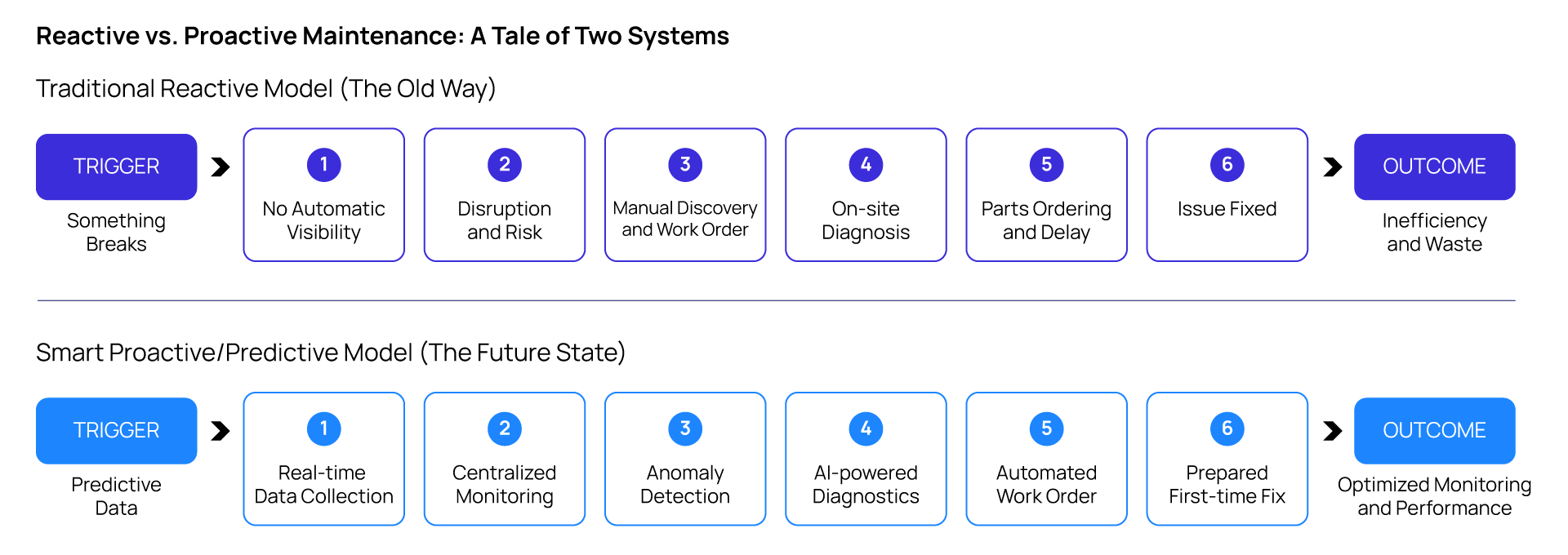
Figure 1. Reactive vs predictive maintenance comparison showing how retail energy monitoring enables proactive HVAC maintenance and improved energy efficiency in retail operations.
How Retail Energy Monitoring Enables Proactive Maintenance
Retailers are now adopting smarter strategies built on connected systems and real-time analytics.
IoT sensors installed across HVAC systems, refrigeration units, and building infrastructure continuously collect operational data. This data is transmitted to centralized platforms where analytics tools monitor performance across entire store networks.
Through smart building energy management, retailers gain real-time visibility into how their energy systems are performing.
Maintenance teams can now detect anomalies early, compare performance across stores, forecast maintenance needs more accurately, and reduce unnecessary service visits. Instead of waiting for equipment failures, issues can be identified and resolved before they escalate.
This proactive approach allows retailers to implement continuous HVAC optimization while improving operational reliability.
Key Metrics for Retail Energy Management
Installing sensors and monitoring systems is only the first step. To improve retail energy management, retailers must also track the right performance indicators.
The most effective retail energy monitoring strategies focus on three core areas: energy efficiency, environmental impact, and operational performance. Together, these metrics help retailers identify inefficiencies, improve commercial HVAC energy efficiency, and support stronger retail ESG reporting.
Key metrics include:
Energy Efficiency
- Energy consumption per square meter to measure store efficiency
- Energy use breakdown across HVAC, refrigeration, and lighting
- Renewable energy usage to track sustainability progress
Environmental Impact
- Refrigerant leakage monitoring in HVAC and refrigeration systems
- Greenhouse gas emissions tracking (Scope 1 and Scope 2)
- Sustainability tracking against environmental targets
Operational Performance
- Indoor air quality metrics such as temperature and humidity
- Equipment downtime monitoring to detect system failures
- Asset lifespan tracking to support predictive maintenance
Tracking these metrics helps retailers move from reactive maintenance to proactive retail energy optimization.
(The infographic below highlights these key retail energy performance metrics.)
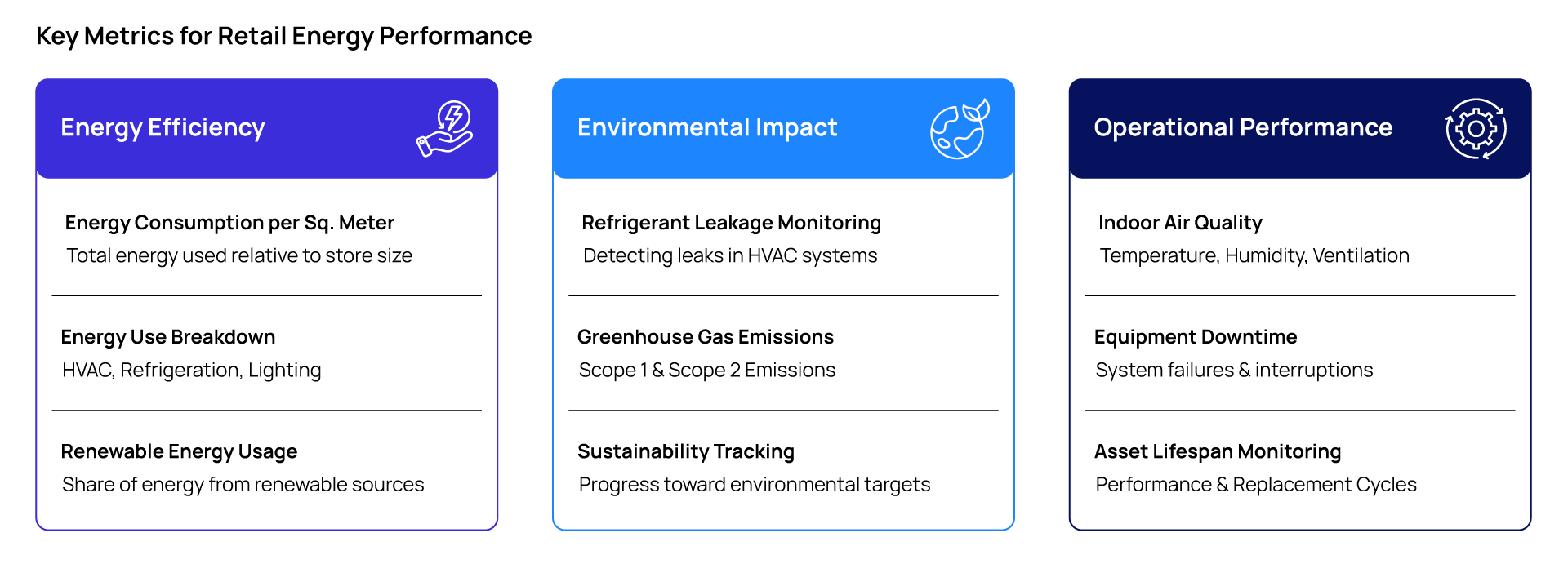
Figure 2. Key metrics for retail energy management, including energy efficiency, environmental impact, and operational performance indicators, are used to optimize retail building systems.
Energy Optimization Priorities Across Different Retail Formats
Energy priorities vary significantly across retail environments.
Supermarkets, fashion retailers, and quick service restaurants all have different operational demands and energy consumption patterns. Treating all store types the same often results in wasted investment and poor performance.
Supermarkets
Supermarkets have the highest refrigeration demand. Refrigeration systems often account for sixty to seventy percent of total energy consumption.
Key optimization priorities include refrigerant management, heat recovery systems, and door strip curtains that reduce cold air loss.
Fashion and Non-Food Retail
In fashion retail stores, HVAC and lighting have become the primary drivers of energy consumption.
Energy strategies focus on advanced HVAC controls, lighting optimization, and improved insulation of doors and windows.
Quick Service Restaurants
Quick-service restaurants rely heavily on kitchen ventilation and refrigeration systems.
Energy priorities include kitchen exhaust optimization, heat-reclaim systems, and improved cold-storage efficiency.
Tailoring strategies to store format enables retailers to achieve better retail energy optimization and improved retail HVAC energy efficiency.
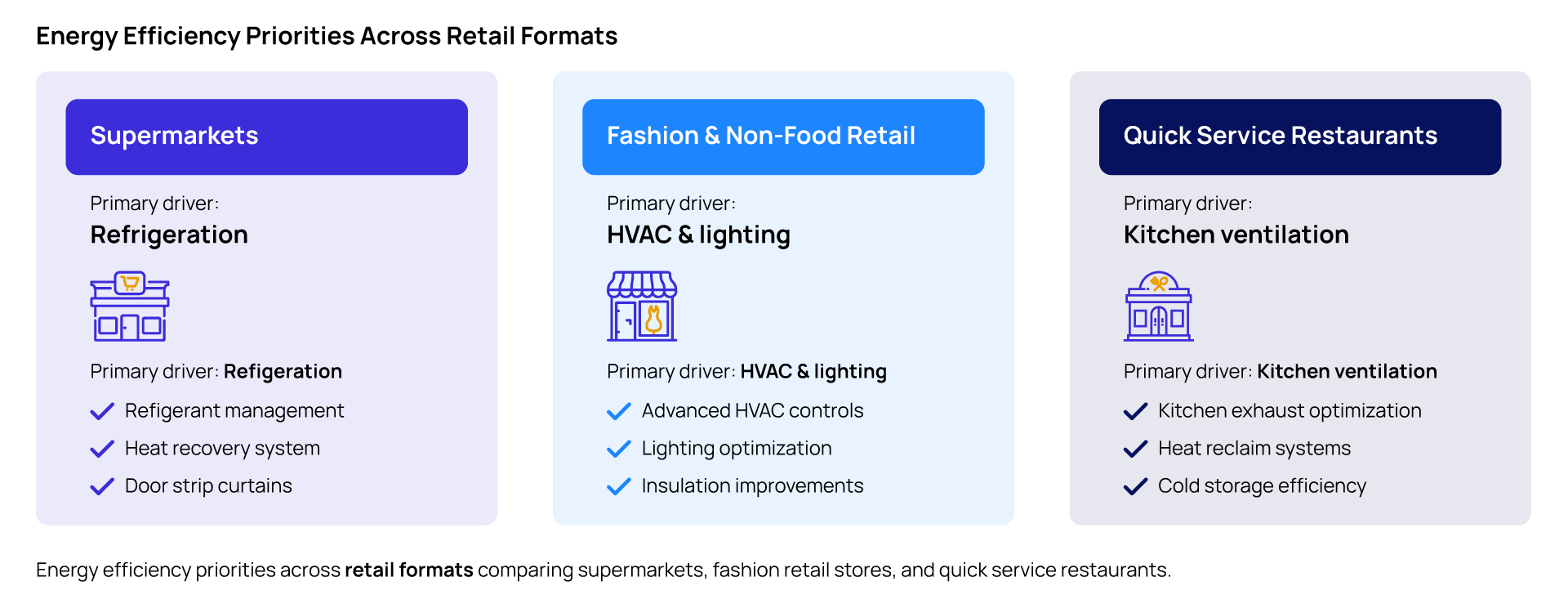
Figure 3. Comparison of energy drivers and optimization strategies across supermarkets, fashion retail stores, and quick service restaurants.
How Climate Conditions Impact Retail Energy Efficiency
Climate significantly influences the energy demands of retail buildings, especially in HVAC and refrigeration systems. Hot, humid climates increase cooling loads, while cold climates raise heating requirements. The effectiveness and return on investment (ROI) of retail energy optimization initiatives often depend on local climate conditions, existing infrastructure, and the maturity of energy technologies deployed across store networks.
Climate’s Influence on Energy Load and Savings
Hot Climates
Retail buildings in hot and humid regions face high cooling loads, making efficient cooling technologies and thermal energy storage critical for energy savings. For example, retailers in Phoenix, Arizona, can achieve up to 56% HVAC energy savings through system optimization.
Cold Climates
In colder regions, heating demands dominate. Retailers in places like Dayton, Ohio, still realize significant savings, around 28%, by improving heating efficiency.
Mild Climates
Regions with moderate climates, such as the United Kingdom, often focus on refrigerant management and efficient heating systems rather than large-scale cooling improvements.
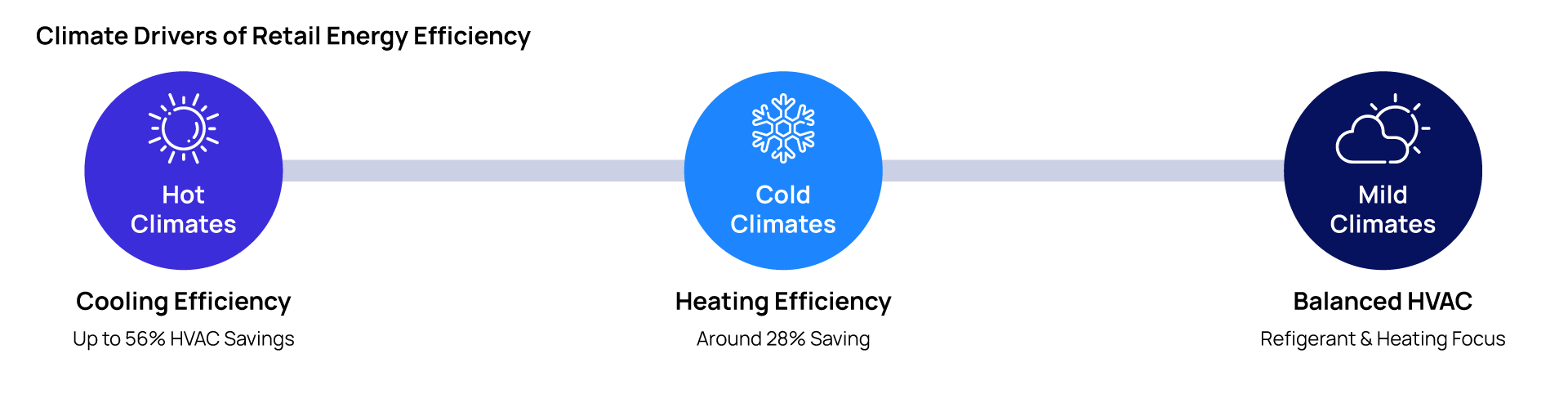
Figure 4. Climate impact on retail energy efficiency shows energy priorities for hot, cold, and mild climates, including cooling efficiency, heating efficiency, and balanced HVAC management.
Global Regulations Driving Energy Efficiency in Retail
Retailers across the globe face diverse climate challenges and regulatory landscapes that shape their approaches to energy efficiency in retail and broader sustainability in retail initiatives. Regulatory frameworks and industry standards increasingly push organizations to adopt energy-efficient HVAC and refrigeration systems while improving transparency in environmental reporting.
United States
Climate & Opportunities
Varying climate zones offer different opportunities to improve commercial HVAC energy efficiency and overall building performance.
Regulations
Federal and state regulations encourage the adoption of energy-efficient HVAC and refrigeration technologies.
Rating / Standards
EnergyGuide Label (mandatory)
ENERGY STAR certification (voluntary)
Impact / Outcome
Mandatory labels help consumers understand energy consumption, while ENERGY STAR promotes the adoption of highly efficient products across retail infrastructure.
Australia
Climate & Opportunities
The NABERS benchmarking system incentivizes retailers to adopt advanced cooling technologies and optimize HVAC scheduling, which are particularly important during long, hot summers.
Rating / Standards
Energy Rating Label (star system)
NABERS – National Australian Built Environment Rating System
Impact / Outcome
Benchmarking encourages the adoption of smart building systems and the implementation of improved retail energy monitoring practices.
Europe
Climate & Opportunities
Diverse climates combined with strong policy frameworks such as the Energy Performance of Buildings Directive (EPBD) encourage integrated refrigeration-heating solutions and high-efficiency heat pumps.
Rating / Standards
EU Energy Label (A–G)
EPREL – European Product Registry for Energy Labelling
Impact / Outcome
Rescaled labeling systems and Minimum Energy Performance Standards (MEPS) drive adoption of smart technologies and improved retail HVAC energy efficiency.
Additional Policies
F-gas regulations and MEPS promote the use of low-GWP refrigerants, heat pumps, and heat recovery systems, particularly in supermarket environments.
India
Climate & Opportunities
India’s Energy Conservation Building Code (ECBC) and upcoming mandatory Energy Star ratings for cooling appliances encourage retailers to adopt efficient HVAC and refrigeration technologies.
Rating / Standards
BEE Star Label (1–5 stars)
Impact / Outcome
Mandatory star ratings beginning in 2026 will accelerate the adoption of energy-efficient cooling equipment across the retail sector.
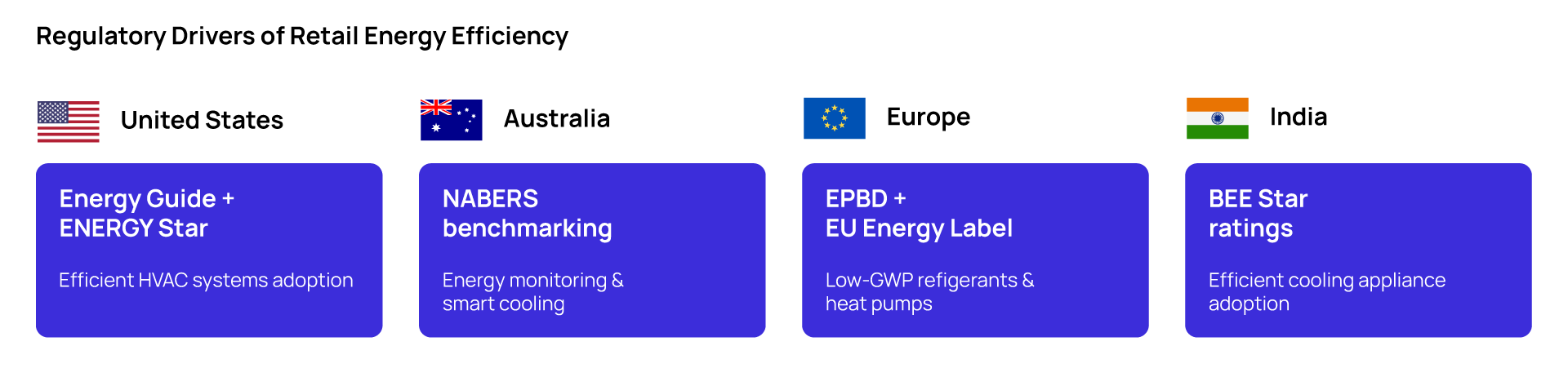
Figure 5. Global regulatory drivers of retail energy efficiency showing key standards such as ENERGY STAR, NABERS, EPBD, F-gas regulations, and BEE Star ratings and their impact on HVAC efficiency.
The Future of Smart Retail Energy Management
Retail environments are evolving into intelligent, data-aware systems that simultaneously optimize energy consumption, operational efficiency, and sustainability goals.
Moving from reactive to proactive retail energy monitoring enables retailers to reduce energy costs, improve in-store comfort, extend equipment lifespan, reduce carbon emissions, and strengthen regulatory compliance.
What was once considered operational best practice is quickly becoming a competitive advantage.
How Hexaware Helps Retailers Improve Energy Management
Hexaware helps retailers gain control over energy-intensive infrastructure by transforming operational data into actionable insights.
Through connected monitoring systems and analytics platforms, Hexaware’s solutions provide:
- unified dashboards for monitoring energy consumption,
- predictive failure analytics to detect equipment issues early, real-time KPI monitoring across store networks, and
- anomaly alerts that highlight irregular energy patterns.
By enabling intelligent smart building energy management, Hexaware helps retailers improve sustainability, reduce operational costs, and strengthen energy governance across their store networks.
Conclusion: Improving Retail Efficiency Through Energy Management
Retail energy management is entering a new era. As retailers balance operational efficiency with sustainability commitments, proactive monitoring and predictive analytics are becoming essential tools.
By implementing modern retail energy management strategies, retailers can improve energy efficiency, reduce operating costs, and build more resilient store networks.
Ready to Optimize Energy Across Your Retail Network?
Discover how Hexaware helps retailers implement intelligent retail energy management solutions that reduce costs, improve operational visibility, and support sustainability goals.
Contact Hexaware to learn more.