Robotic Process Automation Powers Digital Transformation
Insurers struggle with barriers such as duplicate & manual processes, multiple data sources, siloed & incongruent legacy systems, intensive conversations, complex business models and organizational silos. Insurance leaders are discovering new business models created by digital technology to focus their efforts on digital operational excellence and digital customer experience.
The key to digital transformation, operational excellence and improving customer experience is to automate workflows, wherever possible. Apart from core business transformation using COTS packages, there is a need to explore the automation potential for manual processes, managed outside of core applications such as, proposal and claims data entry, payroll audit, insurance certificate generation, invoice processing etc.
Robotic Process Automation (RPA) helps in dealing with these back-office activities, managing operational challenges. Companies can streamline their processes, paving way for digital transformation, by leveraging analytics / Cognitive / ML / NLP capabilities along with RPA.
Automation Potential in Insurance
Insurance Business Processes can be broadly classified under three categories – strategic, knowledge-based and transactional processes.
- Repetitive transactional processes like data entry of risk and claim information, automated underwriting and claims settlement for simple, standard cases, communication letter generation etc. have very high potential of automation.
- Knowledge-based processes that require some intelligence like underwriting & claims decision for medium complexity cases, policy change requests involving financials, renewal processing, coverage query resolution, can be partially automated, with limited intervention from generalist underwriters and claims adjusters.
- Strategic processes, such as sales, underwriting and claims decisions for large and complex risks, risk inspection, loss verification, which are intellectually more demanding are best to be done by specialist underwriters and claim adjusters.
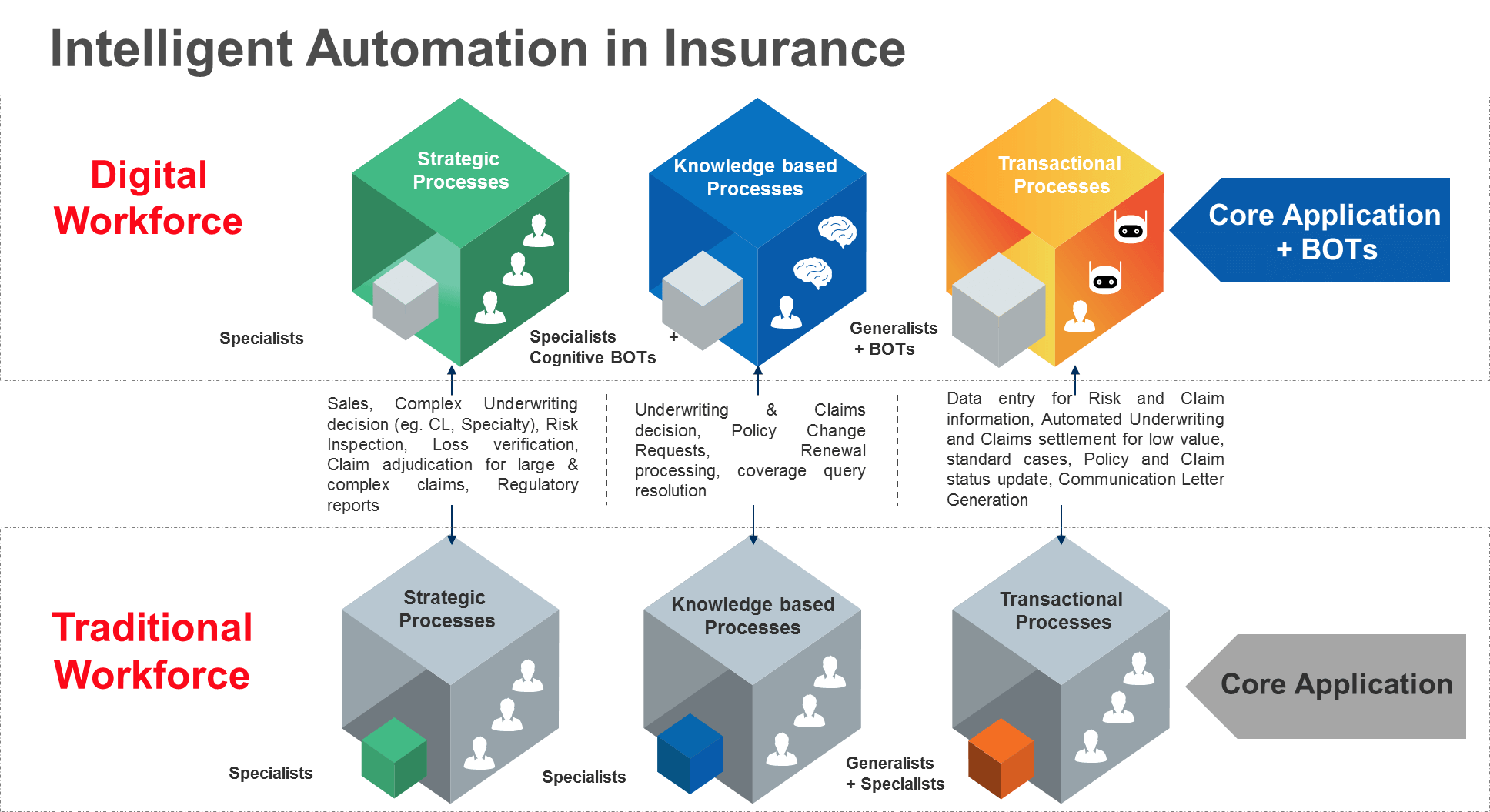
The Digital Workforce in Insurance Operations
Insurers have multiple technology options such as Integration, Workflow Automation, Robotics, etc to automate processes. The choice is usually based on factors such as business need, current application landscape & technology, budget, time, etc.
Robotic Process Automation (RPA) is one such solution which does not require significant disruption of existing technology landscape, which is making it a popular choice amongst insurers.
Intelligent process automation, the combination of artificial intelligence and robotic process automation, has been helping companies to balance trade-offs, achieve greater levels of efficiency and add value to business. RPA combined with machine learning and cognitive computing has been helping in impersonating the activities of humans, conducting highly repetitive tasks.
Machine learning, natural language processing, machine vision, emotion recognition, and optical character recognition, that were earlier reserved for human processing, are now undertaken using bots as well, based on learning acquired over a period of time.
To gain maximum benefit of automation, Insurers are transforming from traditional human intensive workforce model to digital workforce – a combination of ‘People, Core Insurance Platforms and Robotics combined with Cognitive.’
The Core Platforms automate workflows for rule-based insurance processes; Robotics runs repetitive and knowledge-based processes across various disconnected platforms, and People focus on strategic decisions, nurturing customer relationships, managing exceptions, driving change and continuous improvement, and low-frequency activities that are not cost-effective to automate.
Intelligent Process Automation across front-office and back-office insurance processes as depicted in picture below can lead to maximum benefit for the insurers.
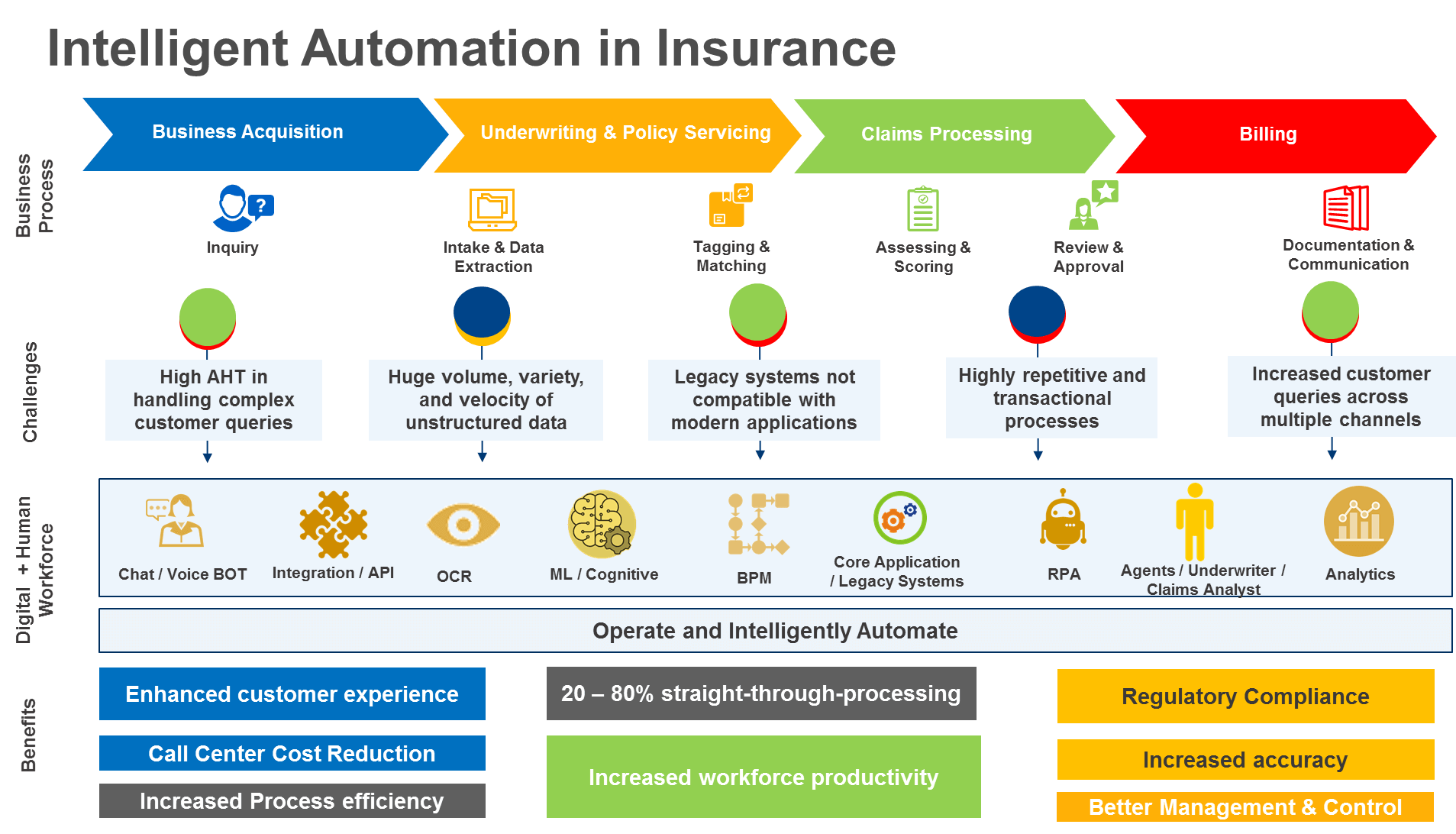
Virtual agents (Chat and Voice Bots) at the front office with language processing capability address queries, perform tasks and resolve issues such as policy and claims status update, next steps on claims, instalment payment processing etc. Cognitive optical character recognition (OCR) and robotic process automation at the back-office extract information from physical documents like proposal form, claims form and update it in the core insurance application. The processes are further optimized using API, BPM, analytics, machine learning and cognitive capabilities. These automation technologies are further enriched with ML/Cognitive capabilities in order the bring the best utilization. Through intelligent process automation, specialist underwriters and claims adjusters can focus on intellectual decisions leading to higher revenue, increased operational efficiency and cost reduction.
For more on our point of view on Intelligent Automation, watch this webinar recording on Digital Insurance Playbook – How to avoid disillusionment in your automation journey
Posted by :
Pratibha