There’s a version of this story that ends at the door. A device gets distributed. A training slot gets filled. A program gets launched; a report gets filed; and somewhere in the accounting, a box gets checked.
That version isn’t false, exactly. But it misses what takes time—and what changes anything. In education, the harder work begins after a student has access to technology. Can they test something with it? Build something? Return to a failed prototype and figure out why it didn’t work? In livelihood programs, the question is similar. A skill becomes economically useful only when someone knows how to convert it into income and find customers who’ll pay for it.
Two CSR initiatives that Hexaware supports are built around this distinction. Both serve different populations, in different cities, through different methods. But both start from the same premise: access without application doesn’t move the needle.
STEM Education in India: What the Syllabus Doesn’t Teach
The classroom problem no textbook has solved
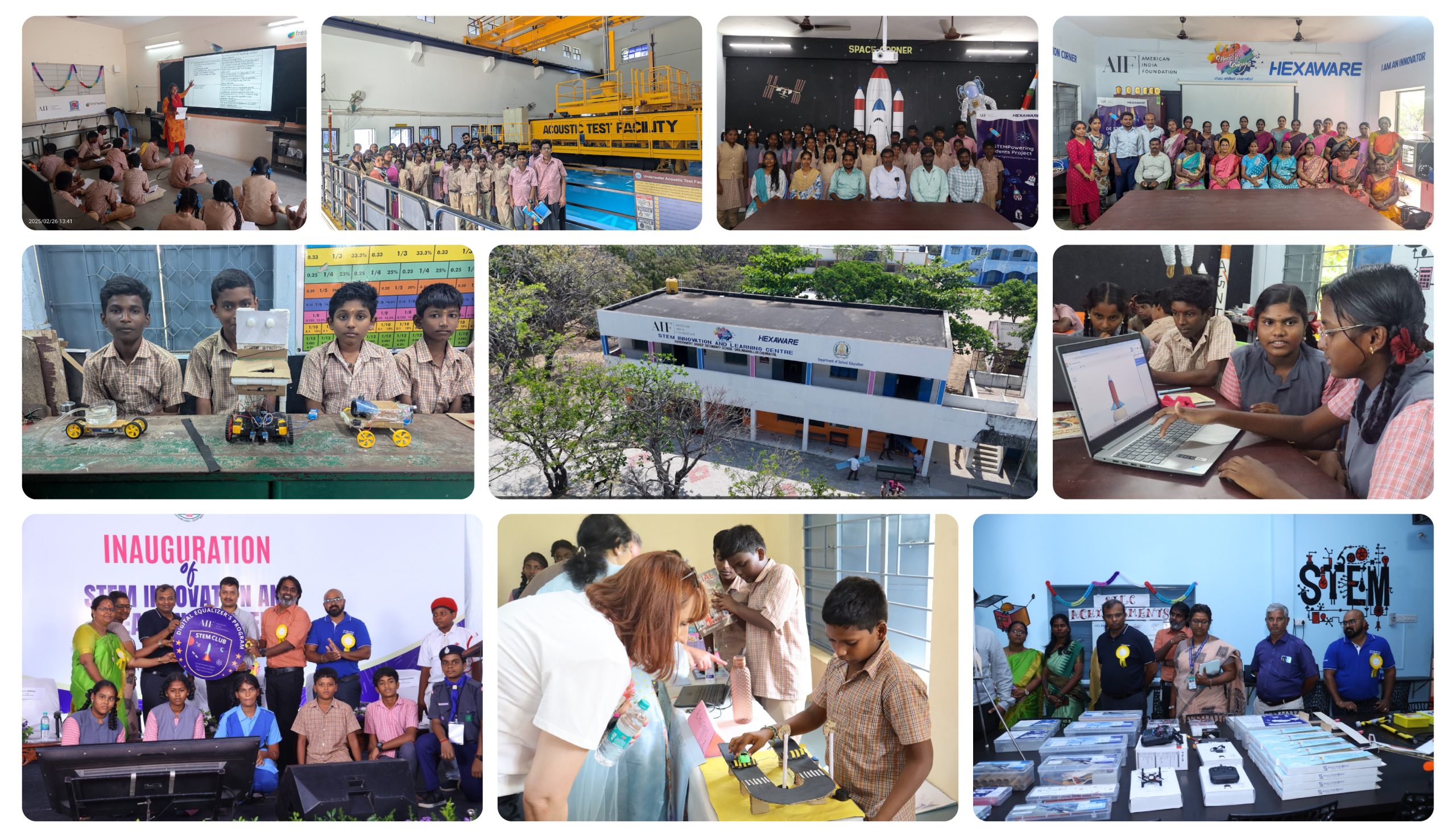
The digital divide in education isn’t only about which students have devices, and which don’t. There’s a second layer to it. Students who encounter concepts as theory versus those who get to test, question, and build with them. Schools across Tamil Nadu teach science and mathematics. Many of their students, though, move through those subjects without ever being asked to write a line of code, build a working model, or figure out why a prototype failed. That gap — between studying STEM and actually doing it—is where STEM initiatives Tamil Nadu schools have been working to intervene, including one supported by Hexaware through the American India Foundation (AFI).
The program targets students in grades VI through VIII, alongside their subject teachers. It combines computer-aided instruction and the Digital and Financial Education program with two interlocking methods: the flipped classroom method, which moves instructional content out of school hours and into home learning, freeing classroom time for activities and application; and the Digital Equalizer program’s core methodology—DEWoT, the Digital Equalizer Way of Teaching — which integrates technology into daily lessons rather than treating it as an occasional feature. Together, they try to change what a school day feels like for a student who’s curious about how things work.
Teachers are central to how this holds together. They’re trained to use the DE Edukit HUB alongside government learning platforms—DIKSHA, TNSCERT, Kalvi TV—and encouraged to produce short instructional videos, or Edu reels, that reinforce concepts between sessions. The bet is that teacher enablement, sustained over time, outlasts any single-year intervention.
Where students take it next
The STEM Innovation and Learning Center provides the hands-on layer. It’s where digital learning for schools moves past screen-based instruction. Students design and build physical prototypes, work through coding on Scratch and Pictoblox, and connect what they’re making to the science and math already in their curriculum. They encounter a problem, propose a solution, and find out whether it holds up under scrutiny.
Among STEM programs for students running in this region, this one has produced some measurable results: independent project ideas, participation in the MANAK INSPIRE Awards, Vanavil Mandram activities, and NMMS exams. Career awareness sessions run alongside, giving students a longer view of where this kind of learning might eventually lead.
D. Gokul is a Grade 9 student from Peerkankaranai, Chennai, who was, by his teachers’ account, a reserved learner who rarely participated in class. After seeing a visually impaired person struggling to use a lift, he spent time designing a voice-controlled lift system. With AIF’s support, he refined the prototype and won the INSPIRE MANAK award—INR 10,000. He now mentors other students at his school. Not every student who goes through the program will do that. But they’ll have had the chance to try something.
In Pune: What Vocational Training Misses, and What Dhara Adds
A skill is not yet a livelihood
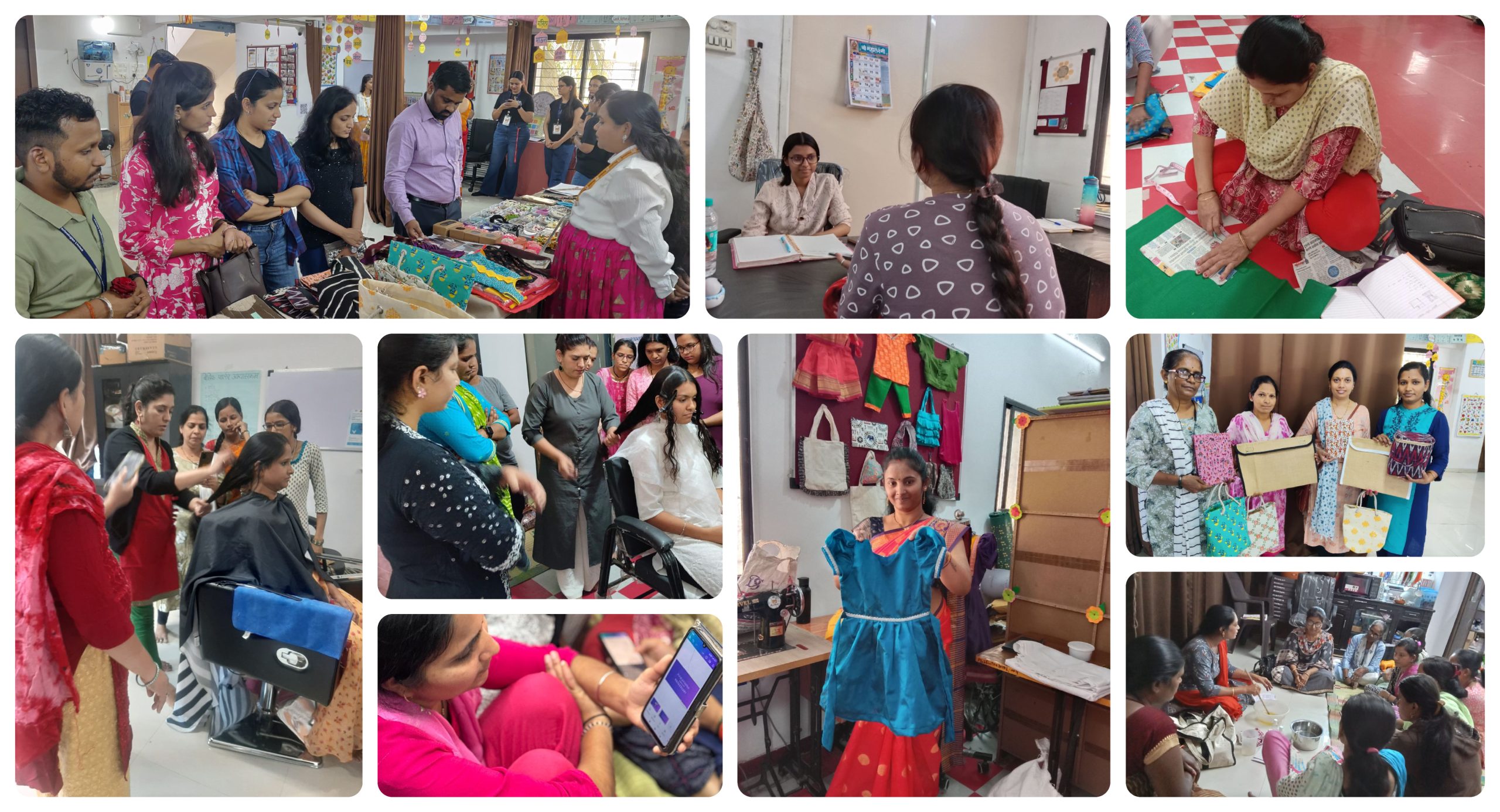
In Pune’s most underserved neighborhoods, Hexaware supports Purnkuti’s Dhara project, which runs vocational training for women in economically marginalized communities. The courses—tailoring and embroidery, salon services, baking, mehndi artistry, jewelry making—are chosen with specific practical logic. These are services that can be practiced from home, with relatively modest startup requirements. The courses are structured to work within the everyday realities of the women who attend them.
But here’s where skill development for women often stops short. Programs teach the craft. They don’t always teach the economics around it. A woman who completes a beauty certification knows how to deliver a service. She may not know what to charge, how to track what she’s spending, or how to find the next customer after the first one.
The entrepreneurship piece the other programs skip
Dhara addresses this through a dedicated Entrepreneurship Development Program. Participants work through marketing basics, budgeting, accounting fundamentals, and business execution, so that a woman who finishes the program can answer a practical question: how do I turn this skill into a functioning small business?
Awareness sessions on social issues run alongside the vocational training. They cover legal rights, financial literacy for women, digital awareness, and personal well-being. These aren’t supplementary; they’re how the program treats women empowerment programs India can in fact scale—not as standalone training events, but as something that equips participants to navigate the wider context their businesses will operate in.
Rekha Sarode, a mother from Vadgaon Sheri, Pune, joined the beauty training course and worked her way from basic techniques to professional-level skills. Her monthly earnings reached INR 10,000. That shift happened within the same household, in the same neighborhood. What changed was what she was able to offer and what she knew about making it work.
Hexaware’s support for Dhara goes beyond funding. It includes connecting graduates to market linkages and free counseling service—trying to make sure that completing a course is a step toward something, not an endpoint.
A Design Question, Not a Category Question
A government school in Chennai and a community training center in Pune don’t have much in common on the surface. Different cities, different beneficiaries, different problems being solved.
What runs through both is something harder to name—a decision, at the design stage, to treat the people being served as capable of doing something with what they’re given. Not just receiving a device, or attending a session, or finishing a course. Actually using it. Building something, pricing something, competing somewhere, running something.
That’s not a given in CSR programming. A lot of well-funded initiatives stop at delivery. These two don’t, and that’s what makes them worth paying attention to.
Gokul mentors his classmates now. Sayali Tai runs her own business. Access opened the door—what came after is the part that mattered.